Research article
| 
27 Oct 2026
Research article |
| 27 Oct 2026
| 27 Oct 2026
D-KULT: data and tools for routine eco-efficient flight operations

Institut für Physik der Atmosphäre, Deutsches Zentrum für Luft- und Raumfahrt e.V., 82234 Oberpfaffenhofen, Germany
Klaus Gierens
Institut für Physik der Atmosphäre, Deutsches Zentrum für Luft- und Raumfahrt e.V., 82234 Oberpfaffenhofen, Germany
Christine Frömming
Institut für Physik der Atmosphäre, Deutsches Zentrum für Luft- und Raumfahrt e.V., 82234 Oberpfaffenhofen, Germany
Björn Beckmann
Deutscher Wetterdienst, 63067 Offenbach, Germany
Luca Bugliaro
Institut für Physik der Atmosphäre, Deutsches Zentrum für Luft- und Raumfahrt e.V., 82234 Oberpfaffenhofen, Germany
Katrin Dahlmann
Institut für Physik der Atmosphäre, Deutsches Zentrum für Luft- und Raumfahrt e.V., 82234 Oberpfaffenhofen, Germany
Simone Dietmüller
Institut für Physik der Atmosphäre, Deutsches Zentrum für Luft- und Raumfahrt e.V., 82234 Oberpfaffenhofen, Germany
Maleen Hanst
Deutscher Wetterdienst, 63067 Offenbach, Germany
Sina Hofer
Institut für Physik der Atmosphäre, Deutsches Zentrum für Luft- und Raumfahrt e.V., 82234 Oberpfaffenhofen, Germany
Julian Jene
Deutsche Lufthansa AG, 50679 Köln, Germany
Simon Kirschler
Institut für Physik der Atmosphäre, Deutsches Zentrum für Luft- und Raumfahrt e.V., 82234 Oberpfaffenhofen, Germany
Carmen G. Köhler
Deutscher Wetterdienst, 63067 Offenbach, Germany
Alexander Lau
Institut für Luftverkehr, Deutsches Zentrum für Luft- und Raumfahrt e.V., 21079 Hamburg, Germany
Ralph Leemüller
DFS Deutsche Flugsicherung GmbH, 63225 Langen, Germany
Aline Liedtke
DFS Deutsche Flugsicherung GmbH, 63225 Langen, Germany
Maximilian Mendiguchia Meuser
Institut für Luftverkehr, Deutsches Zentrum für Luft- und Raumfahrt e.V., 21079 Hamburg, Germany
Patrick Peter
Institut für Physik der Atmosphäre, Deutsches Zentrum für Luft- und Raumfahrt e.V., 82234 Oberpfaffenhofen, Germany
Vanessa Santos Gabriel
Institut für Physik der Atmosphäre, Deutsches Zentrum für Luft- und Raumfahrt e.V., 82234 Oberpfaffenhofen, Germany
Ines Köhler
Deutsche Lufthansa AG, 50679 Köln, Germany
Gerd Saueressig
Deutsche Lufthansa AG, 50679 Köln, Germany
Linda Schlemmer
Deutscher Wetterdienst, 63067 Offenbach, Germany
Jonas Sperling
Lufthansa Systems GmbH, 65479 Raunheim, Germany
Swen Schlobach
Lufthansa Systems GmbH, 65479 Raunheim, Germany
Ralph Schultz
PACE GmbH, 14059 Berlin, Germany
Kristina von Sack
DFS Deutsche Flugsicherung GmbH, 63225 Langen, Germany
Nathalie Waltenberg
DFS Deutsche Flugsicherung GmbH, 63225 Langen, Germany
Zarah Zengerling
Institut für Luftverkehr, Deutsches Zentrum für Luft- und Raumfahrt e.V., 21079 Hamburg, Germany
Related authors
Dennis Piontek, Kai Widmaier, Simon Kirschler, Joël Clément, Jacques Edeline, Jakob Smretschnig, David Antonello, Tarmo Pihlak, Simone Dietmüller, Sigrun Matthes, Katrin Dahlmann, Feijia Yin, and Christiane Voigt
J. Env. Com. Air Transp. Sys. Discuss., https://doi.org/10.5194/jecats-2026-14, https://doi.org/10.5194/jecats-2026-14, 2026
Preprint under review for JECATS
Short summary
Short summary
Model simulations were used to study all air traffic over Northern Europe during 16 days in 2023, following the European Union's planned framework (using CoCiP and aCCFs) for monitoring aviation’s non-CO2 climate effects. Small changes in flight altitude reduced the climate impact of contrails by 48 % while increasing the fleet-wide fuel use by only 0.4 %. The changes had only limited effects on air traffic density and aircraft spacing, showing that climate-optimized flight planning is feasible.
Zosia Staniaszek, Didier A. Hauglustaine, Yann Cohen, Agnieszka Skowron, Sigrun Matthes, Robin Thor, and Marianne T. Lund
Atmos. Chem. Phys., 26, 7985–7999, https://doi.org/10.5194/acp-26-7985-2026, https://doi.org/10.5194/acp-26-7985-2026, 2026
Short summary
Short summary
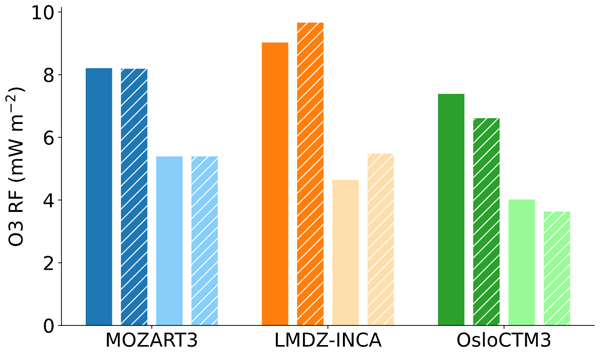
NOx emissions from aircraft affect the climate indirectly, by changing greenhouse gas concentrations. We explore whether the NOx emissions from aviation would have a different effect in different potential future climate states, i.e. a high pollution and low pollution case. The three models we use show varied responses for how this background state alters the climate effects of the NOx emissions. This shows the continuing need to improve our understanding of non-CO2 aviation impacts.
Christine Frömming, Volker Grewe, Sigrun Matthes, Simone Dietmüller, Patrick Peter, Katrin Dahlmann, and Patrick Jöckel
J. Env. Com. Air Transp. Sys. Discuss., https://doi.org/10.5194/jecats-2026-7, https://doi.org/10.5194/jecats-2026-7, 2026
Revised manuscript under review for JECATS
Short summary
Short summary
Aviation non-CO2 climate effects could be reduced through rerouting using Climate Change Functions (CCFs) and its surrogate aCCFs. This study expands CCFs regionally and seasonally and enables a comparison with aCCFs. ACCFs simplify complex processes but reproduce magnitudes and most gradients, though they underestimate variability compared to detailed CCF simulations and limitations to certain altitudes were revealed. The present study promotes future development of refined and extended aCCFs.
Yann Cohen, Didier Hauglustaine, Zosia Staniaszek, Marianne Tronstad Lund, Irene Dedoussi, Sigrun Matthes, Flávio Quadros, Mattia Righi, Agnieszka Skowron, and Robin Thor
Atmos. Chem. Phys., 26, 5983–6013, https://doi.org/10.5194/acp-26-5983-2026, https://doi.org/10.5194/acp-26-5983-2026, 2026
Short summary
Short summary
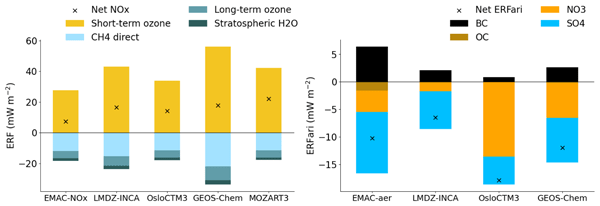
Non-CO2 effects from aviation on climate show large uncertainties. Among them, this study investigates the present-day impact of nitrogen oxides (through ozone and methane) and aerosols produced by aviation on atmospheric composition and therefore on climate, using a global-model intercomparison. Our results show a good consistency between the models for gaseous chemistry, but they also highlight the need for more accurate comparisons and further model development for aerosol parameterization.
Hannes Bruder, Robin N. Thor, Malte Niklaß, Katrin Dahlmann, Roland Eichinger, Florian Linke, Volker Grewe, Sigrun Matthes, and Simon Unterstrasser
Geosci. Model Dev., 19, 3551–3567, https://doi.org/10.5194/gmd-19-3551-2026, https://doi.org/10.5194/gmd-19-3551-2026, 2026
Short summary
Short summary
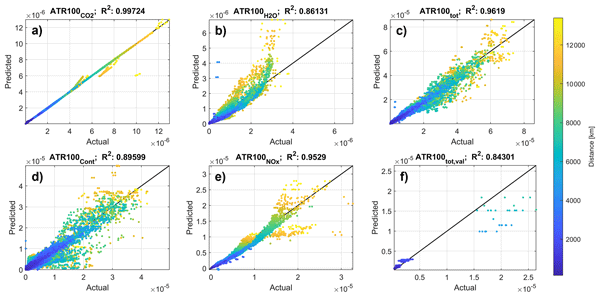
We develop an easy-to-use tool to estimate the per-flight climate effect of CO2 and non-CO2 emissions, based only on aircraft size as well as origin and destination airports. The implemented model results from a comparison of Multiple and Symbolic Regression approaches and exhibits a mean relative error of 21 % with respect to climate response model results. The simplified method is designed for climate footprint assessment and covers jet-powered passenger aircraft with over 20 seats.
Mattia Righi, Simone Ehrenberger, Sabine Brinkop, Johannes Hendricks, Jens Hellekes, Paweł Banyś, Isheeka Dasgupta, Patrick Draheim, Annika Fitz, Manuel Löber, Thomas Pregger, Yvonne Scholz, Angelika Schulz, Birgit Suhr, Nina Thomsen, Christian Martin Weder, Peter Berster, Maximilian Clococeanu, Marc Gelhausen, Alexander Lau, Florian Linke, Sigrun Matthes, and Zarah Lea Zengerling
Earth Syst. Sci. Data, 18, 1619–1664, https://doi.org/10.5194/essd-18-1619-2026, https://doi.org/10.5194/essd-18-1619-2026, 2026
Short summary
Short summary
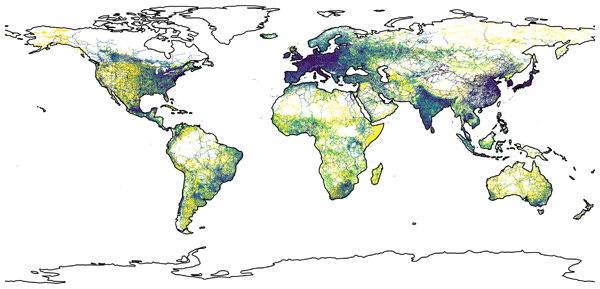
The ELK (EmissionsLandKarte) emission inventory provides global emissions for the three transport sectors (land transport, shipping and aviation) and transport-related emissions for the energy sector (oil refineries). It features a detailed resolution of the emissions in different subsectors, transport-specific quantities like non-exhaust emissions, and aviation-specific parameters. The inventory is complemented with uncertainty scores and validated against well-established global inventories.
Volker Grewe, Simon Blakey, Florian Linke, Sigrun Matthes, Jan Middel, Radu Mirea, Ayce Celikel, David Raper, Feijia Yin, and Xin Zhao
J. Env. Com. Air Transp. Sys., 1, 1, https://doi.org/10.5194/jecats-1-1-2026, https://doi.org/10.5194/jecats-1-1-2026, 2026
Short summary
Short summary
The Journal of Environmentally Compatible Air Transport System (JECATS) is a not-for-profit international scientific journal dedicated to aspects of the air transport system with a focus on the environmental implications. JECATS combines areas of aerospace engineering, fuels, environmental analysis, climate change, economics, aviation climate mitigation, circularity and policy analysis. It includes aviation transport-related aspects and environmental effects from local to global scales.
Patrick Peter, Sigrun Matthes, Christine Frömming, Patrick Jöckel, Luca Bugliaro, Andreas Giez, Martina Krämer, and Volker Grewe
Atmos. Chem. Phys., 25, 5911–5934, https://doi.org/10.5194/acp-25-5911-2025, https://doi.org/10.5194/acp-25-5911-2025, 2025
Short summary
Short summary
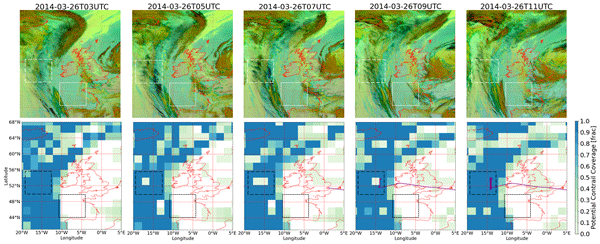
Our study examines how well the global climate model EMAC (ECHAM/MESSy Atmospheric Chemistry) predicts contrail formation by analysing temperature and humidity – two key factors for contrail development and persistence. The model underestimates temperature, leading to an overprediction of contrail formation and larger ice-supersaturated regions. Adjusting the model improves temperature accuracy but adds uncertainties. Better predictions of contrail formation areas can help optimise flight tracks to reduce aviation's climate effect.
Yann Cohen, Didier Hauglustaine, Nicolas Bellouin, Marianne Tronstad Lund, Sigrun Matthes, Agnieszka Skowron, Robin Thor, Ulrich Bundke, Andreas Petzold, Susanne Rohs, Valérie Thouret, Andreas Zahn, and Helmut Ziereis
Atmos. Chem. Phys., 25, 5793–5836, https://doi.org/10.5194/acp-25-5793-2025, https://doi.org/10.5194/acp-25-5793-2025, 2025
Short summary
Short summary
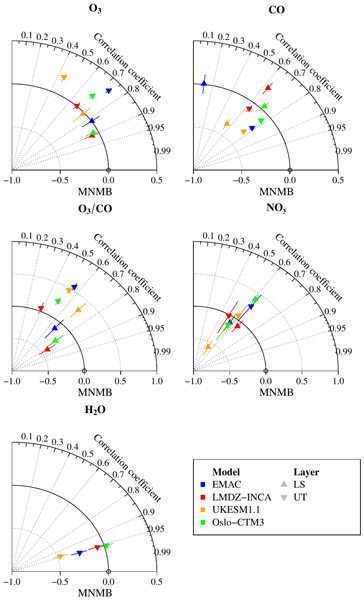
The chemical composition of the atmosphere near the tropopause is a key parameter for evaluating the climate impact of subsonic aviation pollutants. This study uses in situ data collected aboard passenger aircraft to assess the ability of four chemistry–climate models to reproduce (bi-)decadal climatologies of ozone, carbon monoxide, water vapour, and reactive nitrogen in this region. The models reproduce the very distinct ozone seasonality in the upper troposphere and in the lower stratosphere well.
Jurriaan A. van 't Hoff, Didier Hauglustaine, Johannes Pletzer, Agnieszka Skowron, Volker Grewe, Sigrun Matthes, Maximilian M. Meuser, Robin N. Thor, and Irene C. Dedoussi
Atmos. Chem. Phys., 25, 2515–2550, https://doi.org/10.5194/acp-25-2515-2025, https://doi.org/10.5194/acp-25-2515-2025, 2025
Short summary
Short summary
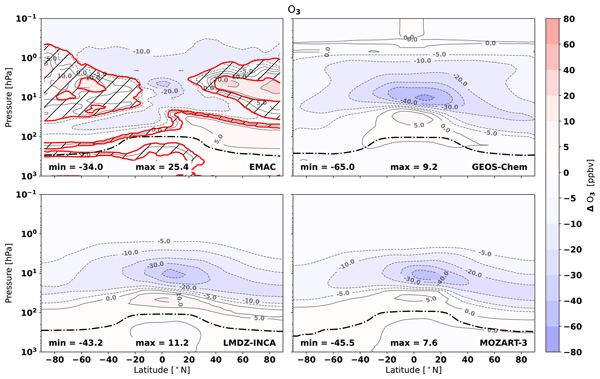
Civil supersonic aircraft may return in the near future, and their emissions could lead to atmospheric changes which are detrimental to public health and the climate. We use four atmospheric chemistry models and show that emissions from a future supersonic aircraft fleet increase stratospheric nitrogen and water vapor levels, while depleting the global ozone column and leading to increases in radiative forcing. Their impacts can be reduced by reducing NOx emissions or the cruise altitude.
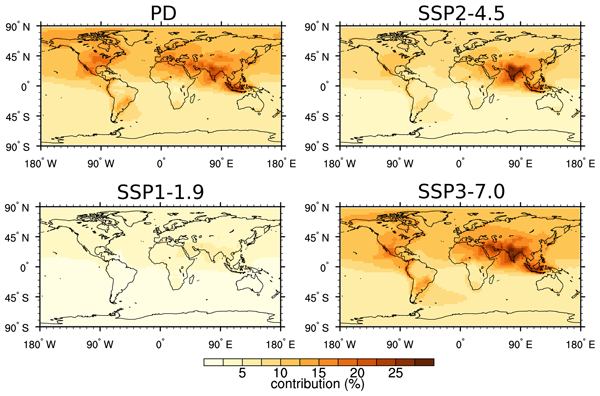
Mariano Mertens, Sabine Brinkop, Phoebe Graf, Volker Grewe, Johannes Hendricks, Patrick Jöckel, Anna Lanteri, Sigrun Matthes, Vanessa S. Rieger, Mattia Righi, and Robin N. Thor
Atmos. Chem. Phys., 24, 12079–12106, https://doi.org/10.5194/acp-24-12079-2024, https://doi.org/10.5194/acp-24-12079-2024, 2024
Short summary
Short summary
We quantified the contributions of land transport, shipping, and aviation emissions to tropospheric ozone; its radiative forcing; and the reductions of the methane lifetime using chemistry-climate model simulations. The contributions were analysed for the conditions of 2015 and for three projections for the year 2050. The results highlight the challenges of mitigating ozone formed by emissions of the transport sector, caused by the non-linearitiy of the ozone chemistry and the long lifetime.
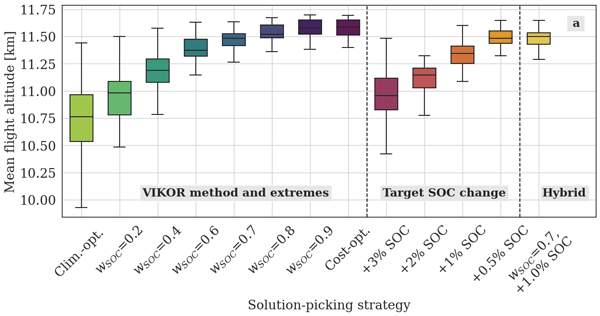
Federica Castino, Feijia Yin, Volker Grewe, Hiroshi Yamashita, Sigrun Matthes, Simone Dietmüller, Sabine Baumann, Manuel Soler, Abolfazl Simorgh, Maximilian Mendiguchia Meuser, Florian Linke, and Benjamin Lührs
Geosci. Model Dev., 17, 4031–4052, https://doi.org/10.5194/gmd-17-4031-2024, https://doi.org/10.5194/gmd-17-4031-2024, 2024
Short summary
Short summary
We introduce SolFinder 1.0, a decision-making tool to select trade-offs between different objective functions for optimal aircraft trajectories, including fuel use, flight time, NOx emissions, contrail distance, and climate impact. The module is included in the AirTraf 3.0 submodel and uses weather conditions simulated by the EMAC atmospheric model. This paper focuses on the ability of SolFinder to identify eco-efficient trajectories, reducing a flight's climate impact at limited cost penalties.
Sigrun Matthes, Simone Dietmüller, Katrin Dahlmann, Christine Frömming, Patrick Peter, Hiroshi Yamashita, Volker Grewe, Feijia Yin, and Federica Castino
Geosci. Model Dev. Discuss., https://doi.org/10.5194/gmd-2023-92, https://doi.org/10.5194/gmd-2023-92, 2023
Revised manuscript not accepted
Short summary
Short summary
Aviation aims to reduce its climate effect by identifying alternative climate-optimized aircraft trajectories. Such routing strategies requires a dedicated meteorological service in order to inform on regions of the atmosphere where aviation non-CO2 emissions have a large climate effect, e.g. by contrail formation or nitrogen-oxide (NOx)-induced ozone formation. This study presents calibration factors for individual non-CO2 effects by comparing with the climate response model AirClim.
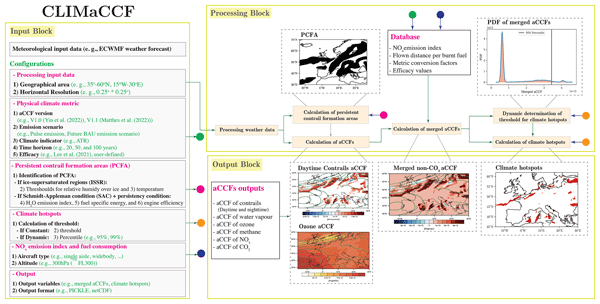
Simone Dietmüller, Sigrun Matthes, Katrin Dahlmann, Hiroshi Yamashita, Abolfazl Simorgh, Manuel Soler, Florian Linke, Benjamin Lührs, Maximilian M. Meuser, Christian Weder, Volker Grewe, Feijia Yin, and Federica Castino
Geosci. Model Dev., 16, 4405–4425, https://doi.org/10.5194/gmd-16-4405-2023, https://doi.org/10.5194/gmd-16-4405-2023, 2023
Short summary
Short summary
Climate-optimized aircraft trajectories avoid atmospheric regions with a large climate impact due to aviation emissions. This requires spatially and temporally resolved information on aviation's climate impact. We propose using algorithmic climate change functions (aCCFs) for CO2 and non-CO2 effects (ozone, methane, water vapor, contrail cirrus). Merged aCCFs combine individual aCCFs by assuming aircraft-specific parameters and climate metrics. Technically this is done with a Python library.
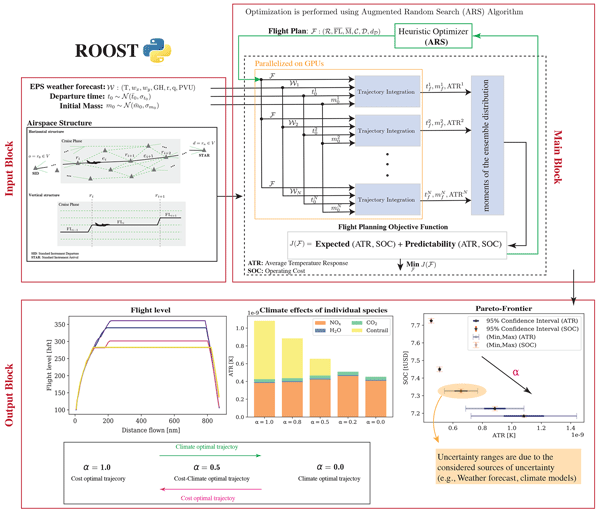
Abolfazl Simorgh, Manuel Soler, Daniel González-Arribas, Florian Linke, Benjamin Lührs, Maximilian M. Meuser, Simone Dietmüller, Sigrun Matthes, Hiroshi Yamashita, Feijia Yin, Federica Castino, Volker Grewe, and Sabine Baumann
Geosci. Model Dev., 16, 3723–3748, https://doi.org/10.5194/gmd-16-3723-2023, https://doi.org/10.5194/gmd-16-3723-2023, 2023
Short summary
Short summary
This paper addresses the robust climate optimal trajectory planning problem under uncertain meteorological conditions within the structured airspace. Based on the optimization methodology, a Python library has been developed, which can be accessed using the following DOI: https://doi.org/10.5281/zenodo.7121862. The developed tool is capable of providing robust trajectories taking into account all probable realizations of meteorological conditions provided by an EPS computationally very fast.
Robin N. Thor, Malte Niklaß, Katrin Dahlmann, Florian Linke, Volker Grewe, and Sigrun Matthes
Geosci. Model Dev. Discuss., https://doi.org/10.5194/gmd-2023-126, https://doi.org/10.5194/gmd-2023-126, 2023
Preprint withdrawn
Short summary
Short summary
We develop a simplied method to estimate the climate effects of single flights through CO2 and non-CO2 effects, exclusively based on the aircraft seat category as well as the origin and destination airports. The derived climate effect functions exhibit a mean relative error of only 15 % with respect to results from a climate response model. The method is designed for climate footprint assessments and covers most commerical airlines with seat capacities starting from 101 passengers.
Feijia Yin, Volker Grewe, Federica Castino, Pratik Rao, Sigrun Matthes, Katrin Dahlmann, Simone Dietmüller, Christine Frömming, Hiroshi Yamashita, Patrick Peter, Emma Klingaman, Keith P. Shine, Benjamin Lührs, and Florian Linke
Geosci. Model Dev., 16, 3313–3334, https://doi.org/10.5194/gmd-16-3313-2023, https://doi.org/10.5194/gmd-16-3313-2023, 2023
Short summary
Short summary
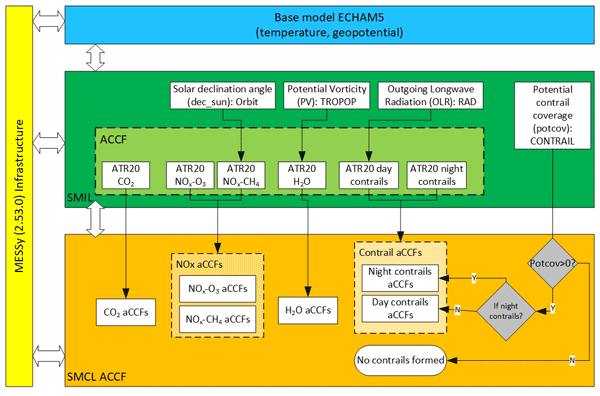
This paper describes a newly developed submodel ACCF V1.0 based on the MESSy 2.53.0 infrastructure. The ACCF V1.0 is based on the prototype algorithmic climate change functions (aCCFs) v1.0 to enable climate-optimized flight trajectories. One highlight of this paper is that we describe a consistent full set of aCCFs formulas with respect to fuel scenario and metrics. We demonstrate the usage of the ACCF submodel using AirTraf V2.0 to optimize trajectories for cost and climate impact.
Robin N. Thor, Mariano Mertens, Sigrun Matthes, Mattia Righi, Johannes Hendricks, Sabine Brinkop, Phoebe Graf, Volker Grewe, Patrick Jöckel, and Steven Smith
Geosci. Model Dev., 16, 1459–1466, https://doi.org/10.5194/gmd-16-1459-2023, https://doi.org/10.5194/gmd-16-1459-2023, 2023
Short summary
Short summary
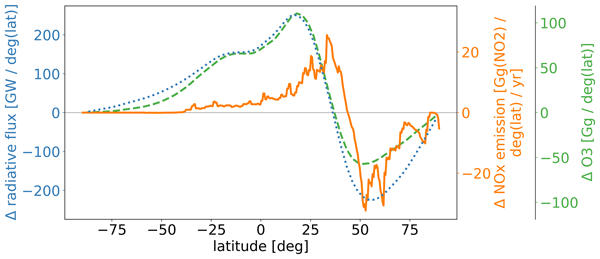
We report on an inconsistency in the latitudinal distribution of aviation emissions between two versions of a data product which is widely used by researchers. From the available documentation, we do not expect such an inconsistency. We run a chemistry–climate model to compute the effect of the inconsistency in emissions on atmospheric chemistry and radiation and find that the radiative forcing associated with aviation ozone is 7.6 % higher when using the less recent version of the data.
Etienne Terrenoire, Didier A. Hauglustaine, Yann Cohen, Anne Cozic, Richard Valorso, Franck Lefèvre, and Sigrun Matthes
Atmos. Chem. Phys., 22, 11987–12023, https://doi.org/10.5194/acp-22-11987-2022, https://doi.org/10.5194/acp-22-11987-2022, 2022
Short summary
Short summary
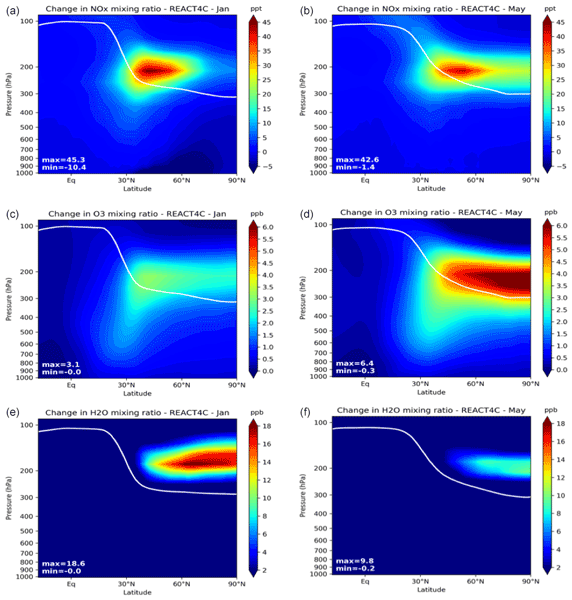
Aviation NOx emissions not only have an impact on global climate by changing ozone and methane levels in the atmosphere, but also contribute to the deterioration of local air quality. The LMDZ-INCA global model is applied to re-evaluate the impact of aircraft NOx and aerosol emissions on climate. We investigate the impact of present-day and future (2050) aircraft emissions on atmospheric composition and the associated radiative forcings of climate for ozone, methane and aerosol direct forcings.
Sean M. Davis, William T. Ball, Yue Jia, Gabriel Chiodo, Justin A. Alsing, James Keeble, Hideharu Akiyoshi, Carlo Arosio, Ewa M. Bednarz, Andreas Chrysanthou, Melanie Coldewey-Egbers, Robert Damadeo, Sandip Dhomse, Mohamadou A. Diallo, Simone Dietmuller, Roland Eichinger, Stacey Frith, Birgit Hassler, Michaela I. Hegglin, Daan Hubert, Patrick Jöckel, Béatrice Josse, Natalya Kramarova, Diego Loyola, Eliane Maillard Barras, Marion Marchand, Olaf Morgenstern, David Plummer, Robert W. Portmann, Karen H. Rosenlof, Alexei Rozanov, Viktoria F. Sofieva, Johannes Staehelin, Timofei Sukhodolov, Kleareti Tourpali, Ronald J. Van der A, H. J. Ray Wang, Krzysztof Wargan, Shingo Watanabe, Mark Weber, Jeannette D. Wild, Yousuke Yamashita, and Jerry Ziemke
Atmos. Chem. Phys., 26, 13817–13843, https://doi.org/10.5194/acp-26-13817-2026, https://doi.org/10.5194/acp-26-13817-2026, 2026
Short summary
Short summary
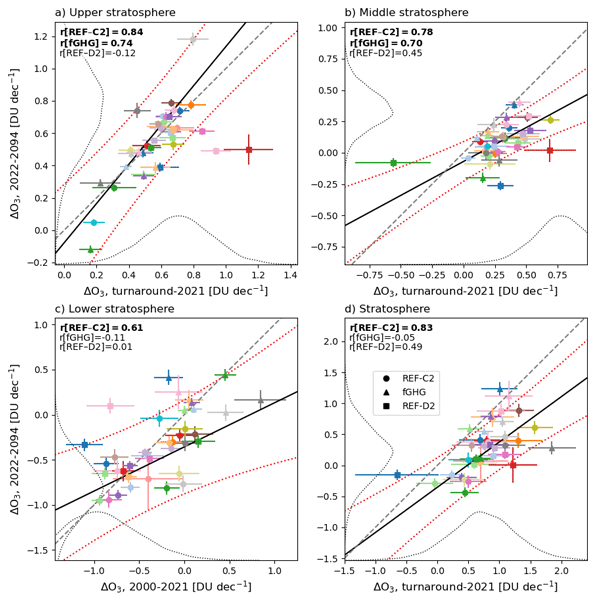
This study investigates tropical ozone changes in models and satellite observations to determine how well they agree and whether observations can constrain model projections. At some levels, satellite records disagree significantly on the magnitude of ozone changes. While early and late 21st century trends are correlated across models, suggesting a potential emergent constraint, the spread in observations means they are unable to provide guidance on the credibility of model projections.

Klaus Martin Gierens
J. Env. Com. Air Transp. Sys., 1, 4, https://doi.org/10.5194/jecats-1-4-2026, https://doi.org/10.5194/jecats-1-4-2026, 2026
Short summary
Short summary
Lessening of non-CO2 aviation impacts on climate is often accompanied by an increase of fuel consumption and emissions. Planning mitigation actions requires balancing the desired climate benefit against inevitable simultaneous climate damage. Due to uncertainty, statistical methods are needed to estimate the failure risk of concrete mitigation measures. This paper presents the required mathematics.
Roland Eichinger, Katrin Dahlmann, Volker Grewe, Benedict Enderle, Sven Maertens, Shravana Kumar, Christian Weder, Wolfgang Grimme, Leon Müller, Malte Niklaß, and Hannes Bruder
J. Env. Com. Air Transp. Sys. Discuss., https://doi.org/10.5194/jecats-2026-15, https://doi.org/10.5194/jecats-2026-15, 2026
Preprint under review for JECATS
Short summary
Short summary
Sustainable aviation fuels (SAFs) reduce the climate effect of contrail-induced cirrus cloudiness (CiC). We assess the climate-optimal SAF distribution for flights departing from Copenhagen Airport in 2030. We determine the potential climate benefit of 6 % available SAF by allocating it to flights with climatologically largest CiC climate effect to fuel use ratio. Targeted SAF use can here increase the CO2e benefit by 60 kt and enhance the CiC share in climate benefit from 20 % to almost 50 %.
Dennis Piontek, Kai Widmaier, Simon Kirschler, Joël Clément, Jacques Edeline, Jakob Smretschnig, David Antonello, Tarmo Pihlak, Simone Dietmüller, Sigrun Matthes, Katrin Dahlmann, Feijia Yin, and Christiane Voigt
J. Env. Com. Air Transp. Sys. Discuss., https://doi.org/10.5194/jecats-2026-14, https://doi.org/10.5194/jecats-2026-14, 2026
Preprint under review for JECATS
Short summary
Short summary
Model simulations were used to study all air traffic over Northern Europe during 16 days in 2023, following the European Union's planned framework (using CoCiP and aCCFs) for monitoring aviation’s non-CO2 climate effects. Small changes in flight altitude reduced the climate impact of contrails by 48 % while increasing the fleet-wide fuel use by only 0.4 %. The changes had only limited effects on air traffic density and aircraft spacing, showing that climate-optimized flight planning is feasible.
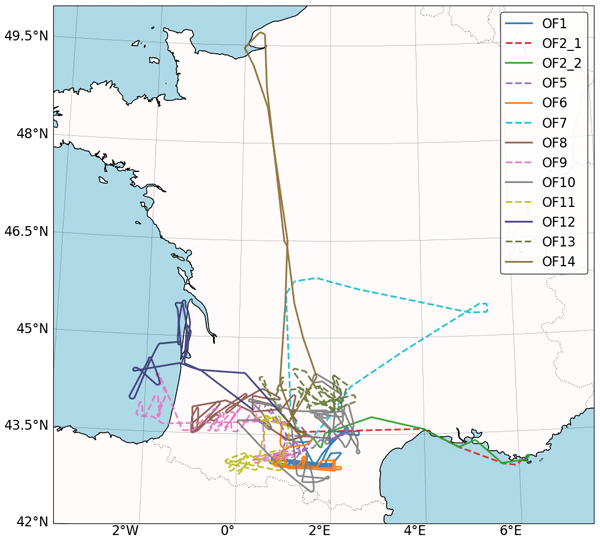
Deniz Menekay, Johannes Lucke, Tina Jurkat-Witschas, Christiane Voigt, Simon Kirschler, and Aurélien Bourdon
Earth Syst. Sci. Data, 18, 5837–5853, https://doi.org/10.5194/essd-18-5837-2026, https://doi.org/10.5194/essd-18-5837-2026, 2026
Short summary
Short summary
Clouds containing supercooled water droplets are important for improving weather prediction, climate models, and safe aviation operations because they can lead to aircraft icing. To better understand these clouds, research flights were conducted over Europe using instruments that measure cloud particles and their water content. This study presents the resulting dataset of cloud properties together with the methods used to process and evaluate the measurements collected during the flights.
Jakob Smretschnig, Feijia Yin, Dennis Piontek, Joël Clément, Sergio Núñez Arribas, Katrin Dahlmann, Federica Castino, and Volker Grewe
J. Env. Com. Air Transp. Sys. Discuss., https://doi.org/10.5194/jecats-2026-13, https://doi.org/10.5194/jecats-2026-13, 2026
Preprint under review for JECATS
Short summary
Short summary
Commercial flights usually follow routes that minimise travel time and fuel use, but these routes are not always best for the climate. Using simulations of 4,000 flights forming condensation trails over northern Europe in 2023, we show that small altitude changes can reduce climate impact by 11 to 16% for only 1.2% more fuel. The benefits of avoiding warming from condensation trails outweigh the additional climate effect from nitrogen oxides and water vapour emissions.
Sabrina Ries, Luca Bugliaro, Vanessa Santos Gabriel, Dennis Piontek, Matteo Aricò, and Christiane Voigt
EGUsphere, https://doi.org/10.5194/egusphere-2026-3046, https://doi.org/10.5194/egusphere-2026-3046, 2026
This preprint is open for discussion and under review for Atmospheric Measurement Techniques (AMT).
Short summary
Short summary
Persistent contrails from airplanes significantly contribute to climate warming. Modifying the flight route of aircraft to avoid contrail formation can help reducing this effect. We have developed an automated framework that derives contrail life cycles from satellite data and attributes them to a given flight. Each contrail is assigned a "matching score" that measures the plausibility of this classification. The method can be used to verify contrail avoidance flight trials.
Hemanth Kumar Alladi, Julian Quimbayo-Duarte, Luca Bugliaro, Johanna Mayer, Shweta Singh, and Juerg Schmidli
Atmos. Chem. Phys., 26, 8617–8635, https://doi.org/10.5194/acp-26-8617-2026, https://doi.org/10.5194/acp-26-8617-2026, 2026
Short summary
Short summary
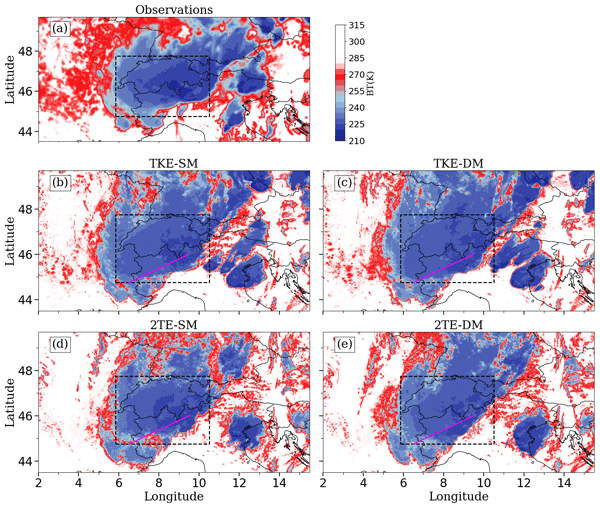
Thunderstorms can transport moisture into the lower stratosphere, affecting climate. Over mountains, models fail to represent them due to underrepresentation of turbulent mixing and cloud microphysics. This study evaluates the operational and new turbulence schemes, with single and double moment microphysics, in the ICOsahedral Nonhydrostatic (ICON) model against observations. The operational turbulence scheme enhances mixing, while double moment produces taller storms with more ice transport.
Zosia Staniaszek, Didier A. Hauglustaine, Yann Cohen, Agnieszka Skowron, Sigrun Matthes, Robin Thor, and Marianne T. Lund
Atmos. Chem. Phys., 26, 7985–7999, https://doi.org/10.5194/acp-26-7985-2026, https://doi.org/10.5194/acp-26-7985-2026, 2026
Short summary
Short summary
NOx emissions from aircraft affect the climate indirectly, by changing greenhouse gas concentrations. We explore whether the NOx emissions from aviation would have a different effect in different potential future climate states, i.e. a high pollution and low pollution case. The three models we use show varied responses for how this background state alters the climate effects of the NOx emissions. This shows the continuing need to improve our understanding of non-CO2 aviation impacts.
Vanessa Santos Gabriel, Luca Bugliaro, Dennis Piontek, Sabrina Ries, and Christiane Voigt
Atmos. Meas. Tech., 19, 3271–3289, https://doi.org/10.5194/amt-19-3271-2026, https://doi.org/10.5194/amt-19-3271-2026, 2026
Short summary
Short summary
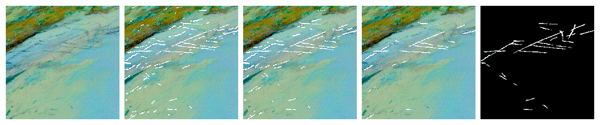
We present a new contrail detection algorithm for the geostationary Meteosat satellite, which outperforms other algorithms for this satellite. Contrails influence the climate but are hard to identify in geostationary satellite imagery with moderate spatial resolution. With this study, we enable the design and evaluation of contrail mitigation strategies, contributing to ongoing efforts in understanding, monitoring, and reducing the climate impact of aviation-induced cirrus.
Christine Frömming, Volker Grewe, Sigrun Matthes, Simone Dietmüller, Patrick Peter, Katrin Dahlmann, and Patrick Jöckel
J. Env. Com. Air Transp. Sys. Discuss., https://doi.org/10.5194/jecats-2026-7, https://doi.org/10.5194/jecats-2026-7, 2026
Revised manuscript under review for JECATS
Short summary
Short summary
Aviation non-CO2 climate effects could be reduced through rerouting using Climate Change Functions (CCFs) and its surrogate aCCFs. This study expands CCFs regionally and seasonally and enables a comparison with aCCFs. ACCFs simplify complex processes but reproduce magnitudes and most gradients, though they underestimate variability compared to detailed CCF simulations and limitations to certain altitudes were revealed. The present study promotes future development of refined and extended aCCFs.
Yann Cohen, Didier Hauglustaine, Zosia Staniaszek, Marianne Tronstad Lund, Irene Dedoussi, Sigrun Matthes, Flávio Quadros, Mattia Righi, Agnieszka Skowron, and Robin Thor
Atmos. Chem. Phys., 26, 5983–6013, https://doi.org/10.5194/acp-26-5983-2026, https://doi.org/10.5194/acp-26-5983-2026, 2026
Short summary
Short summary
Non-CO2 effects from aviation on climate show large uncertainties. Among them, this study investigates the present-day impact of nitrogen oxides (through ozone and methane) and aerosols produced by aviation on atmospheric composition and therefore on climate, using a global-model intercomparison. Our results show a good consistency between the models for gaseous chemistry, but they also highlight the need for more accurate comparisons and further model development for aerosol parameterization.
Hannes Bruder, Robin N. Thor, Malte Niklaß, Katrin Dahlmann, Roland Eichinger, Florian Linke, Volker Grewe, Sigrun Matthes, and Simon Unterstrasser
Geosci. Model Dev., 19, 3551–3567, https://doi.org/10.5194/gmd-19-3551-2026, https://doi.org/10.5194/gmd-19-3551-2026, 2026
Short summary
Short summary
We develop an easy-to-use tool to estimate the per-flight climate effect of CO2 and non-CO2 emissions, based only on aircraft size as well as origin and destination airports. The implemented model results from a comparison of Multiple and Symbolic Regression approaches and exhibits a mean relative error of 21 % with respect to climate response model results. The simplified method is designed for climate footprint assessment and covers jet-powered passenger aircraft with over 20 seats.
Vanessa Santos Gabriel, Luca Bugliaro, Mara Montag, Sabrina Ries, Ziming Wang, Kai Widmaier, Matteo Arico, Simon Unterstrasser, Johanna Mayer, Deniz Menekay, Andreas Marsing, Elena de la Torre Castro, Liam Megill, Monika Scheibe, and Christiane Voigt
Earth Syst. Sci. Data, 18, 2397–2412, https://doi.org/10.5194/essd-18-2397-2026, https://doi.org/10.5194/essd-18-2397-2026, 2026
Short summary
Short summary
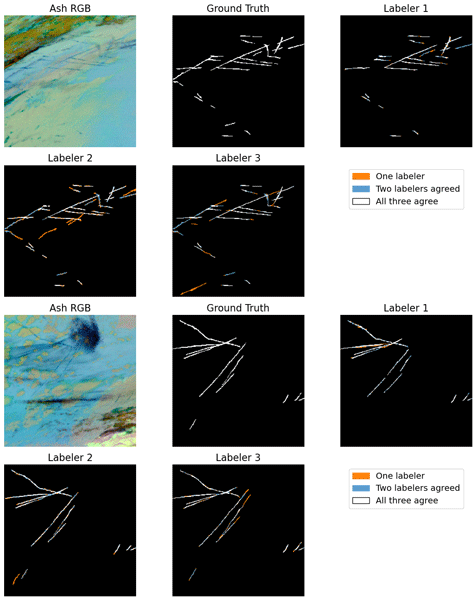
We provide observations of the geostationary Meteosat satellite with contrails labeled by three people complemented with detailed cloud information. Contrails influence climate but are hard to identify in satellite imagery. With this study, we support contrail detection development and evaluation, stress the subjectivity of human labeling and reveal which meteorological conditions highlight or hide contrails. This dataset contributes to a better understanding of aviation’s climate impact.
Mattia Righi, Simone Ehrenberger, Sabine Brinkop, Johannes Hendricks, Jens Hellekes, Paweł Banyś, Isheeka Dasgupta, Patrick Draheim, Annika Fitz, Manuel Löber, Thomas Pregger, Yvonne Scholz, Angelika Schulz, Birgit Suhr, Nina Thomsen, Christian Martin Weder, Peter Berster, Maximilian Clococeanu, Marc Gelhausen, Alexander Lau, Florian Linke, Sigrun Matthes, and Zarah Lea Zengerling
Earth Syst. Sci. Data, 18, 1619–1664, https://doi.org/10.5194/essd-18-1619-2026, https://doi.org/10.5194/essd-18-1619-2026, 2026
Short summary
Short summary
The ELK (EmissionsLandKarte) emission inventory provides global emissions for the three transport sectors (land transport, shipping and aviation) and transport-related emissions for the energy sector (oil refineries). It features a detailed resolution of the emissions in different subsectors, transport-specific quantities like non-exhaust emissions, and aviation-specific parameters. The inventory is complemented with uncertainty scores and validated against well-established global inventories.
Volker Grewe, Simon Blakey, Florian Linke, Sigrun Matthes, Jan Middel, Radu Mirea, Ayce Celikel, David Raper, Feijia Yin, and Xin Zhao
J. Env. Com. Air Transp. Sys., 1, 1, https://doi.org/10.5194/jecats-1-1-2026, https://doi.org/10.5194/jecats-1-1-2026, 2026
Short summary
Short summary
The Journal of Environmentally Compatible Air Transport System (JECATS) is a not-for-profit international scientific journal dedicated to aspects of the air transport system with a focus on the environmental implications. JECATS combines areas of aerospace engineering, fuels, environmental analysis, climate change, economics, aviation climate mitigation, circularity and policy analysis. It includes aviation transport-related aspects and environmental effects from local to global scales.
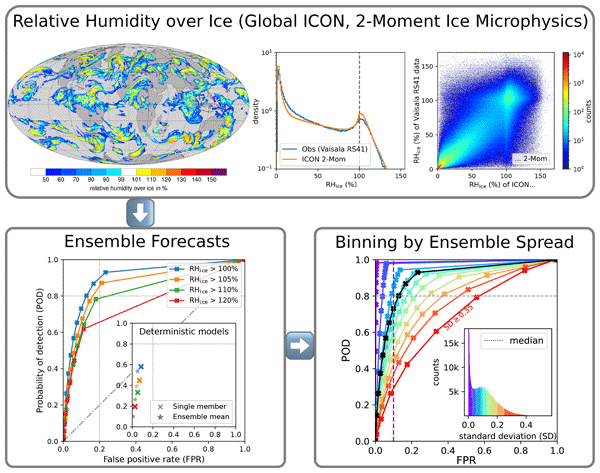
Maleen Hanst, Carmen G. Köhler, Axel Seifert, and Linda Schlemmer
Atmos. Chem. Phys., 25, 17253–17274, https://doi.org/10.5194/acp-25-17253-2025, https://doi.org/10.5194/acp-25-17253-2025, 2025
Short summary
Short summary
Persistent condensation trails typically occur due to aircraft flying through certain cold and humid regions. In most cases, these contrails have a warming impact on the climate. Predicting these regions in advance allows flight planners to re-route airplanes. We show that an adaptation of the ice microphysics scheme in a certain weather forecast model improves the prediction of these regions. Running an ensemble of simulations with this scheme improves the prediction quality even further.

Matteo Aricò, Dennis Piontek, Luca Bugliaro, Johanna Mayer, Richard Müller, Frank Kalinka, and Max Butter
Atmos. Meas. Tech., 18, 7129–7152, https://doi.org/10.5194/amt-18-7129-2025, https://doi.org/10.5194/amt-18-7129-2025, 2025
Short summary
Short summary
The goal is to assess the feasibility of an ice crystal icing detection algorithm based exclusively on remote sensing data. Active measurements are used to train and validate a newly developed random forest algorithm that is applied to passive satellite imagery to estimate the ice crystal icing conditions probability. 83 % of ice crystal icing conditions are correctly detected, showing potential for an operational implementation to mitigate its negative effects on the fleet.
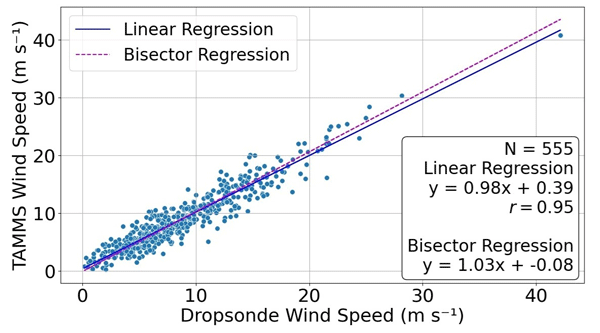
Soodabeh Namdari, Sanja Dmitrovic, Gao Chen, Yonghoon Choi, Ewan Crosbie, Joshua P. DiGangi, Glenn S. Diskin, Richard A. Ferrare, Johnathan W. Hair, Simon Kirschler, John B. Nowak, Kenneth L. Thornhill, Christiane Voigt, Holger Vömel, Xubin Zeng, and Armin Sorooshian
Atmos. Meas. Tech., 18, 4325–4345, https://doi.org/10.5194/amt-18-4325-2025, https://doi.org/10.5194/amt-18-4325-2025, 2025
Short summary
Short summary
We conducted this study to assess the accuracy of airborne measurements of wind, temperature, and humidity, essential for understanding atmospheric processes. Using data from NASA's ACTIVATE campaign, we compared measurements from the Turbulent Air Motion Measurement System (TAMMS) and diode laser hygrometer (DLH) aboard a Falcon aircraft with dropsondes from a King Air, matching data points based on location and time using statistical methods. The study showed strong agreement, confirming the reliability of these methods for advancing climate models.
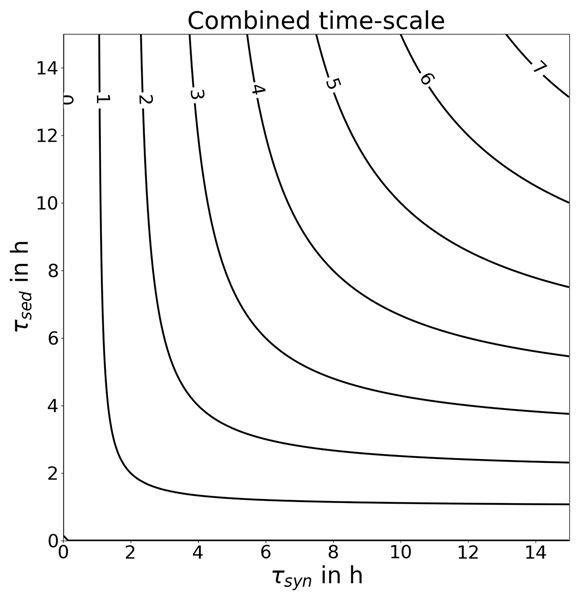
Sina Maria Hofer and Klaus Martin Gierens
Atmos. Chem. Phys., 25, 9235–9247, https://doi.org/10.5194/acp-25-9235-2025, https://doi.org/10.5194/acp-25-9235-2025, 2025
Short summary
Short summary
The climate effect of contrails depends on the contrail lifetime. Thus, it is important to know what constrains the lifetime. In this paper, we characterise the two most important contrail dissolution processes via their respective timescales. Both timescales are in the order of a couple of hours, depending on the synoptic situation and the size of the contrail ice crystals. The combined timescale, which combines both processes, is the harmonic mean of the two single timescales.
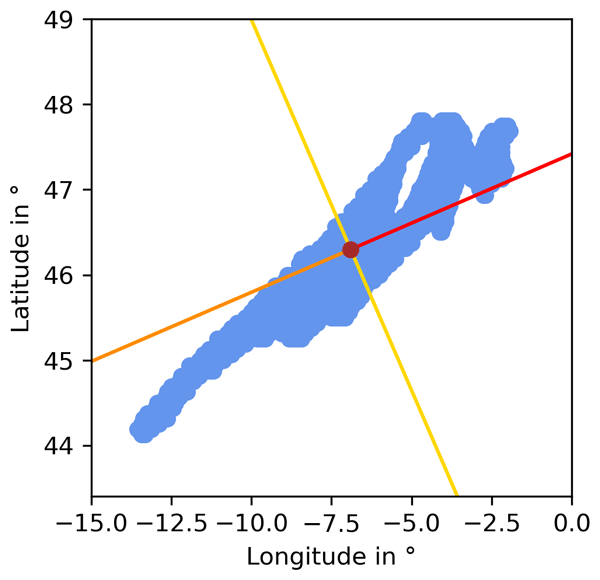
Sina Maria Hofer and Klaus Martin Gierens
Atmos. Chem. Phys., 25, 6843–6856, https://doi.org/10.5194/acp-25-6843-2025, https://doi.org/10.5194/acp-25-6843-2025, 2025
Short summary
Short summary
Ice supersaturation is an immaterial feature that does not generally move with the wind that carries contrails and cirrus clouds. Here we analyse the different motions and show that ice supersaturated regions (ISSRs) on average move slower than the wind, the direction of movement is usually quite similar, and the distributions of both velocities follow Weibull distributions. The almost identical direction of the movements is beneficial for contrail lifetimes.
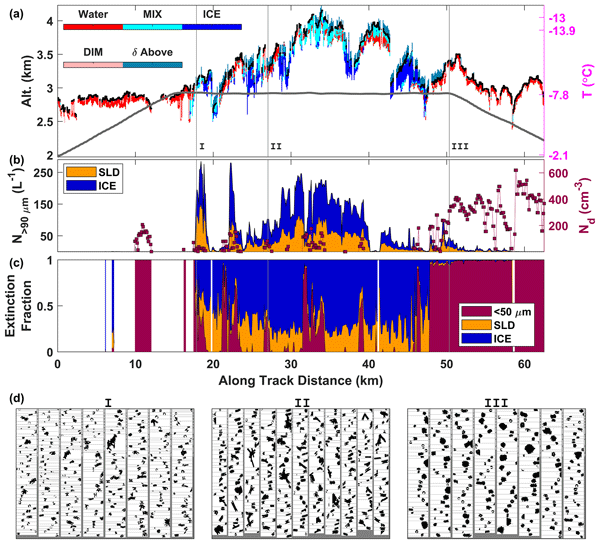
Ewan Crosbie, Johnathan W. Hair, Amin R. Nehrir, Richard A. Ferrare, Chris Hostetler, Taylor Shingler, David Harper, Marta Fenn, James Collins, Rory Barton-Grimley, Brian Collister, K. Lee Thornhill, Christiane Voigt, Simon Kirschler, and Armin Sorooshian
Atmos. Meas. Tech., 18, 2639–2658, https://doi.org/10.5194/amt-18-2639-2025, https://doi.org/10.5194/amt-18-2639-2025, 2025
Short summary
Short summary
A method was developed to extract information from airborne lidar observations about the distribution of ice and liquid water within clouds. The method specifically targets signatures of horizontal and vertical gradients in ice and water that appear in the polarization of the lidar signals. The method was tested against direct measurements of the cloud properties collected by a second aircraft.
Patrick Peter, Sigrun Matthes, Christine Frömming, Patrick Jöckel, Luca Bugliaro, Andreas Giez, Martina Krämer, and Volker Grewe
Atmos. Chem. Phys., 25, 5911–5934, https://doi.org/10.5194/acp-25-5911-2025, https://doi.org/10.5194/acp-25-5911-2025, 2025
Short summary
Short summary
Our study examines how well the global climate model EMAC (ECHAM/MESSy Atmospheric Chemistry) predicts contrail formation by analysing temperature and humidity – two key factors for contrail development and persistence. The model underestimates temperature, leading to an overprediction of contrail formation and larger ice-supersaturated regions. Adjusting the model improves temperature accuracy but adds uncertainties. Better predictions of contrail formation areas can help optimise flight tracks to reduce aviation's climate effect.
Yann Cohen, Didier Hauglustaine, Nicolas Bellouin, Marianne Tronstad Lund, Sigrun Matthes, Agnieszka Skowron, Robin Thor, Ulrich Bundke, Andreas Petzold, Susanne Rohs, Valérie Thouret, Andreas Zahn, and Helmut Ziereis
Atmos. Chem. Phys., 25, 5793–5836, https://doi.org/10.5194/acp-25-5793-2025, https://doi.org/10.5194/acp-25-5793-2025, 2025
Short summary
Short summary
The chemical composition of the atmosphere near the tropopause is a key parameter for evaluating the climate impact of subsonic aviation pollutants. This study uses in situ data collected aboard passenger aircraft to assess the ability of four chemistry–climate models to reproduce (bi-)decadal climatologies of ozone, carbon monoxide, water vapour, and reactive nitrogen in this region. The models reproduce the very distinct ozone seasonality in the upper troposphere and in the lower stratosphere well.
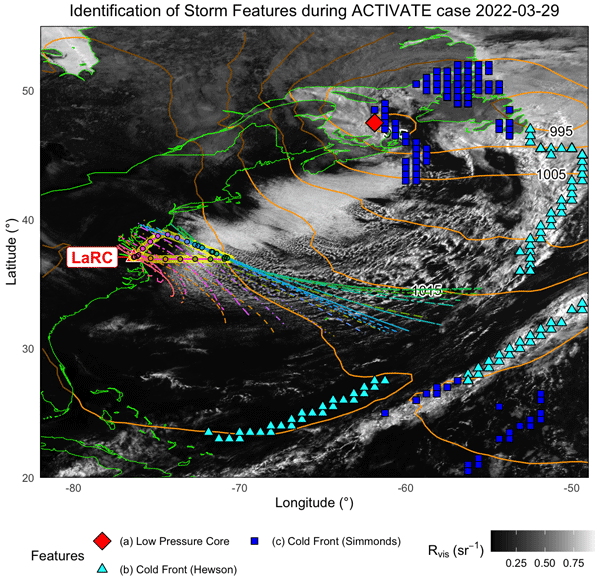
Florian Tornow, Ann Fridlind, George Tselioudis, Brian Cairns, Andrew Ackerman, Seethala Chellappan, David Painemal, Paquita Zuidema, Christiane Voigt, Simon Kirschler, and Armin Sorooshian
Atmos. Chem. Phys., 25, 5053–5074, https://doi.org/10.5194/acp-25-5053-2025, https://doi.org/10.5194/acp-25-5053-2025, 2025
Short summary
Short summary
The recent NASA campaign ACTIVATE (Aerosol Cloud meTeorology Interactions oVer the western ATlantic Experiment) performed 71 tandem flights in mid-latitude marine cold-air outbreaks off the US eastern seaboard. We provide meteorological and cloud transition stage context, allowing us to identify days that are most suitable for Lagrangian modeling and analysis. Surveyed cloud properties show signatures of cloud microphysical processes, such as cloud-top entrainment and secondary ice formation.
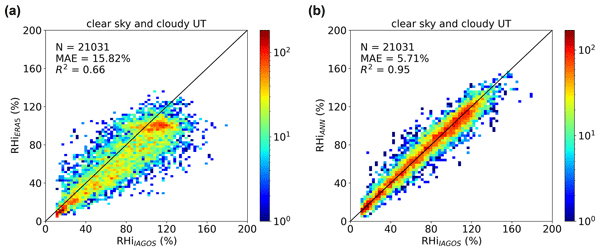
Ziming Wang, Luca Bugliaro, Klaus Gierens, Michaela I. Hegglin, Susanne Rohs, Andreas Petzold, Stefan Kaufmann, and Christiane Voigt
Atmos. Chem. Phys., 25, 2845–2861, https://doi.org/10.5194/acp-25-2845-2025, https://doi.org/10.5194/acp-25-2845-2025, 2025
Short summary
Short summary
Upper-tropospheric relative humidity bias in the ERA5 weather model is corrected by 10 % by an artificial neural network using aircraft in-service humidity data and thermodynamic and dynamical variables. The improved skills of the weather model will advance cirrus research, weather forecasts, and measures for contrail reduction.
Jurriaan A. van 't Hoff, Didier Hauglustaine, Johannes Pletzer, Agnieszka Skowron, Volker Grewe, Sigrun Matthes, Maximilian M. Meuser, Robin N. Thor, and Irene C. Dedoussi
Atmos. Chem. Phys., 25, 2515–2550, https://doi.org/10.5194/acp-25-2515-2025, https://doi.org/10.5194/acp-25-2515-2025, 2025
Short summary
Short summary
Civil supersonic aircraft may return in the near future, and their emissions could lead to atmospheric changes which are detrimental to public health and the climate. We use four atmospheric chemistry models and show that emissions from a future supersonic aircraft fleet increase stratospheric nitrogen and water vapor levels, while depleting the global ozone column and leading to increases in radiative forcing. Their impacts can be reduced by reducing NOx emissions or the cruise altitude.
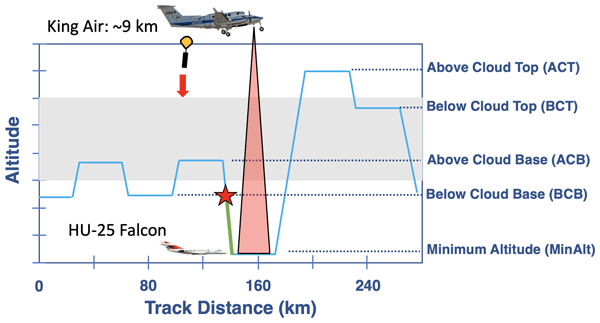
Kira Zeider, Kayla McCauley, Sanja Dmitrovic, Leong Wai Siu, Yonghoon Choi, Ewan C. Crosbie, Joshua P. DiGangi, Glenn S. Diskin, Simon Kirschler, John B. Nowak, Michael A. Shook, Kenneth L. Thornhill, Christiane Voigt, Edward L. Winstead, Luke D. Ziemba, Paquita Zuidema, and Armin Sorooshian
Atmos. Chem. Phys., 25, 2407–2422, https://doi.org/10.5194/acp-25-2407-2025, https://doi.org/10.5194/acp-25-2407-2025, 2025
Short summary
Short summary
In situ aircraft data collected over the northwest Atlantic Ocean are utilized to compare aerosol conditions and turbulence between near-surface and below-cloud-base altitudes for different regimes of coupling strength between those two levels, along with how cloud microphysical properties vary across those regimes. Stronger coupling yields more homogenous aerosol structure vertically along with higher cloud drop concentrations and sea salt influence in clouds.
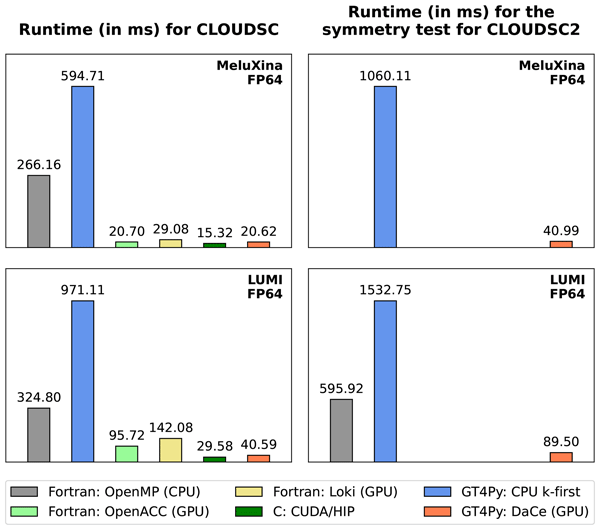
Stefano Ubbiali, Christian Kühnlein, Christoph Schär, Linda Schlemmer, Thomas C. Schulthess, Michael Staneker, and Heini Wernli
Geosci. Model Dev., 18, 529–546, https://doi.org/10.5194/gmd-18-529-2025, https://doi.org/10.5194/gmd-18-529-2025, 2025
Short summary
Short summary
We explore a high-level programming model for porting numerical weather prediction (NWP) model codes to graphics processing units (GPUs). We present a Python rewrite with the domain-specific library GT4Py (GridTools for Python) of two renowned cloud microphysics schemes and the associated tangent-linear and adjoint algorithms. We find excellent portability, competitive GPU performance, robust execution on diverse computing architectures, and enhanced code maintainability and user productivity.
Mariano Mertens, Sabine Brinkop, Phoebe Graf, Volker Grewe, Johannes Hendricks, Patrick Jöckel, Anna Lanteri, Sigrun Matthes, Vanessa S. Rieger, Mattia Righi, and Robin N. Thor
Atmos. Chem. Phys., 24, 12079–12106, https://doi.org/10.5194/acp-24-12079-2024, https://doi.org/10.5194/acp-24-12079-2024, 2024
Short summary
Short summary
We quantified the contributions of land transport, shipping, and aviation emissions to tropospheric ozone; its radiative forcing; and the reductions of the methane lifetime using chemistry-climate model simulations. The contributions were analysed for the conditions of 2015 and for three projections for the year 2050. The results highlight the challenges of mitigating ozone formed by emissions of the transport sector, caused by the non-linearitiy of the ozone chemistry and the long lifetime.
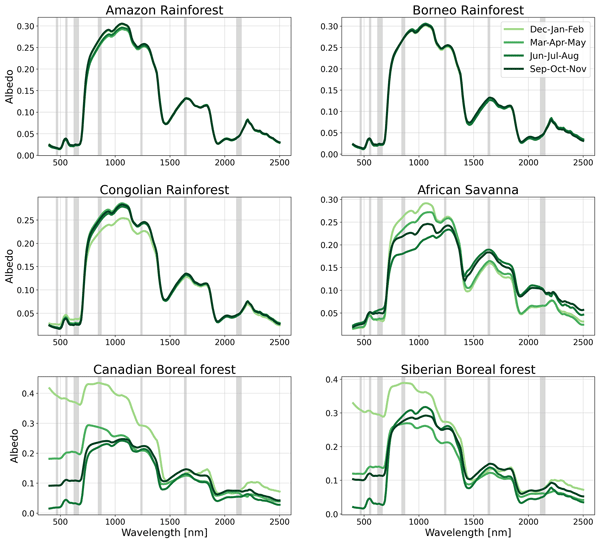
Giulia Roccetti, Luca Bugliaro, Felix Gödde, Claudia Emde, Ulrich Hamann, Mihail Manev, Michael Fritz Sterzik, and Cedric Wehrum
Atmos. Meas. Tech., 17, 6025–6046, https://doi.org/10.5194/amt-17-6025-2024, https://doi.org/10.5194/amt-17-6025-2024, 2024
Short summary
Short summary
The amount of sunlight reflected by the Earth’s surface (albedo) is vital for the Earth's radiative system. While satellite instruments offer detailed spatial and temporal albedo maps, they only cover seven wavelength bands. We generate albedo maps that fully span the visible and near-infrared range using a machine learning algorithm. These maps reveal how the reflectivity of different land surfaces varies throughout the year. Our dataset enhances the understanding of the Earth's energy balance.
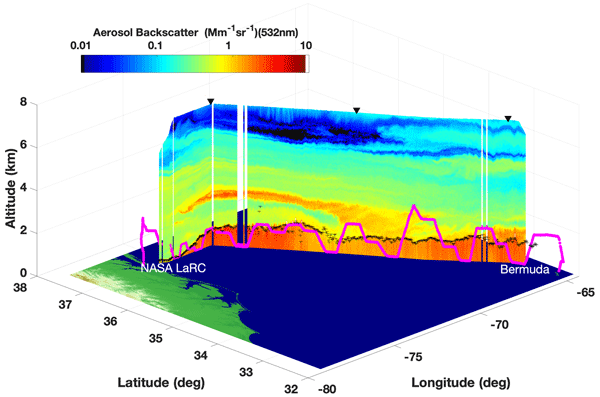
Cassidy Soloff, Taiwo Ajayi, Yonghoon Choi, Ewan C. Crosbie, Joshua P. DiGangi, Glenn S. Diskin, Marta A. Fenn, Richard A. Ferrare, Francesca Gallo, Johnathan W. Hair, Miguel Ricardo A. Hilario, Simon Kirschler, Richard H. Moore, Taylor J. Shingler, Michael A. Shook, Kenneth L. Thornhill, Christiane Voigt, Edward L. Winstead, Luke D. Ziemba, and Armin Sorooshian
Atmos. Chem. Phys., 24, 10385–10408, https://doi.org/10.5194/acp-24-10385-2024, https://doi.org/10.5194/acp-24-10385-2024, 2024
Short summary
Short summary
Using aircraft measurements over the northwestern Atlantic between the US East Coast and Bermuda and trajectory modeling of continental outflow, we identify trace gas and particle properties that exhibit gradients with offshore distance and quantify these changes with high-resolution measurements of concentrations and particle chemistry, size, and scattering properties. This work furthers our understanding of the complex interactions between continental and marine environments.
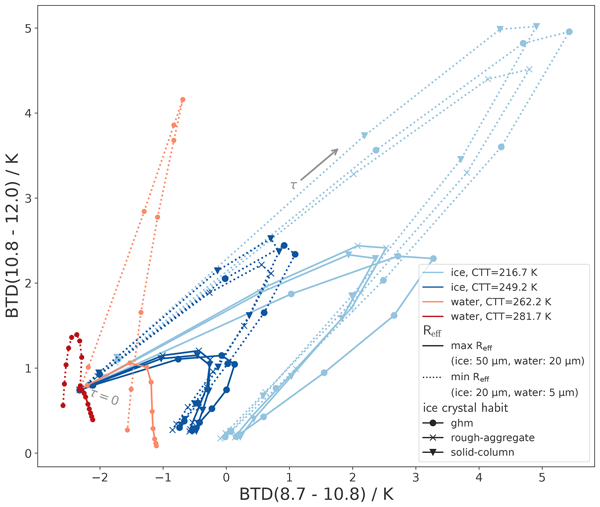
Johanna Mayer, Bernhard Mayer, Luca Bugliaro, Ralf Meerkötter, and Christiane Voigt
Atmos. Meas. Tech., 17, 5161–5185, https://doi.org/10.5194/amt-17-5161-2024, https://doi.org/10.5194/amt-17-5161-2024, 2024
Short summary
Short summary
This study uses radiative transfer calculations to characterize the relation of two satellite channel combinations (namely infrared window brightness temperature differences – BTDs – of SEVIRI) to the thermodynamic cloud phase. A sensitivity analysis reveals the complex interplay of cloud parameters and their contribution to the observed phase dependence of BTDs. This knowledge helps to design optimal cloud-phase retrievals and to understand their potential and limitations.
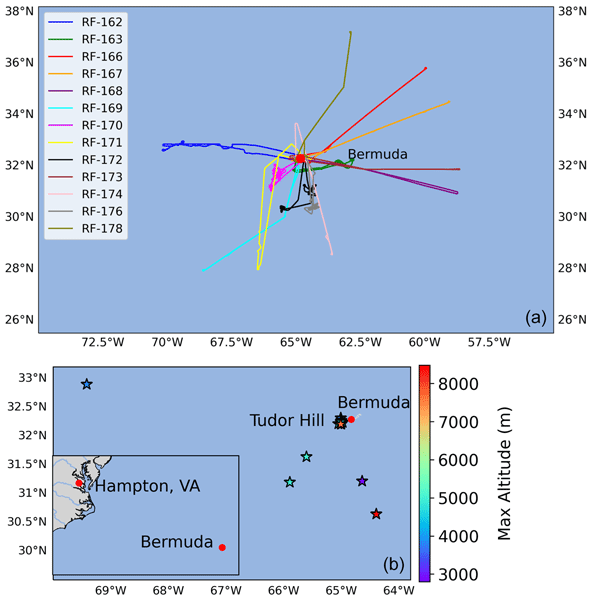
Taiwo Ajayi, Yonghoon Choi, Ewan C. Crosbie, Joshua P. DiGangi, Glenn S. Diskin, Marta A. Fenn, Richard A. Ferrare, Johnathan W. Hair, Miguel Ricardo A. Hilario, Chris A. Hostetler, Simon Kirschler, Richard H. Moore, Taylor J. Shingler, Michael A. Shook, Cassidy Soloff, Kenneth L. Thornhill, Christiane Voigt, Edward L. Winstead, Luke D. Ziemba, and Armin Sorooshian
Atmos. Chem. Phys., 24, 9197–9218, https://doi.org/10.5194/acp-24-9197-2024, https://doi.org/10.5194/acp-24-9197-2024, 2024
Short summary
Short summary
This study uses airborne data to examine vertical profiles of trace gases, aerosol particles, and meteorological variables over a remote marine area (Bermuda). Results show distinct differences based on both air mass source region (North America, Ocean, Caribbean/North Africa) and altitude for a given air mass type. This work highlights the sensitivity of remote marine areas to long-range transport and the importance of considering the vertical dependence of trace gas and aerosol properties.
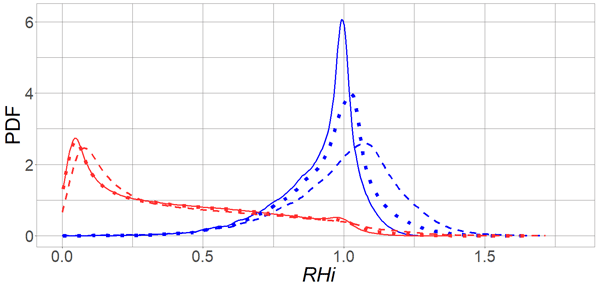
Sina Hofer, Klaus Gierens, and Susanne Rohs
Atmos. Chem. Phys., 24, 7911–7925, https://doi.org/10.5194/acp-24-7911-2024, https://doi.org/10.5194/acp-24-7911-2024, 2024
Short summary
Short summary
We try to improve the forecast of ice supersaturation (ISS) and potential persistent contrails using data on dynamical quantities in addition to temperature and relative humidity in a modern kind of regression model. Although the results are improved, they are not good enough for flight routing. The origin of the problem is the strong overlap of probability densities conditioned on cases with and without ice-supersaturated regions (ISSRs) in the important range of 70–100 %.
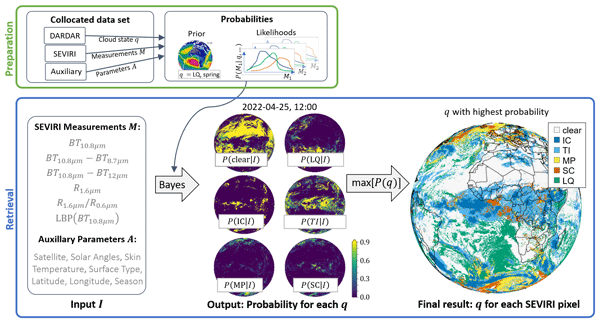
Johanna Mayer, Luca Bugliaro, Bernhard Mayer, Dennis Piontek, and Christiane Voigt
Atmos. Meas. Tech., 17, 4015–4039, https://doi.org/10.5194/amt-17-4015-2024, https://doi.org/10.5194/amt-17-4015-2024, 2024
Short summary
Short summary
ProPS (PRObabilistic cloud top Phase retrieval for SEVIRI) is a method to detect clouds and their thermodynamic phase with a geostationary satellite, distinguishing between clear sky and ice, mixed-phase, supercooled and warm liquid clouds. It uses a Bayesian approach based on the lidar–radar product DARDAR. The method allows studying cloud phases, especially mixed-phase and supercooled clouds, rarely observed from geostationary satellites. This can be used for comparison with climate models.
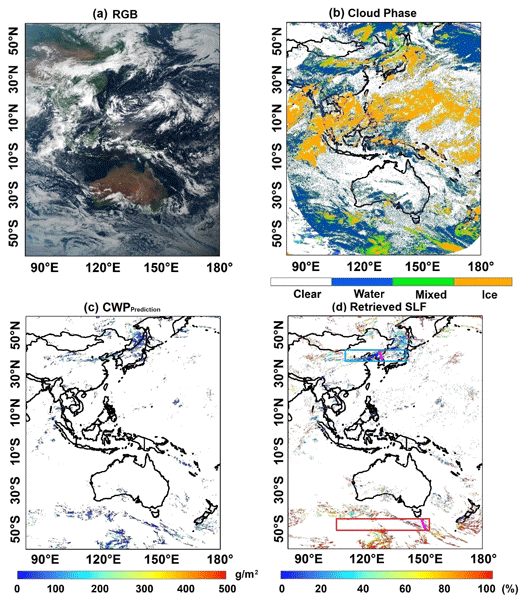
Ziming Wang, Husi Letu, Huazhe Shang, and Luca Bugliaro
Atmos. Chem. Phys., 24, 7559–7574, https://doi.org/10.5194/acp-24-7559-2024, https://doi.org/10.5194/acp-24-7559-2024, 2024
Short summary
Short summary
The supercooled liquid fraction (SLF) in mixed-phase clouds is retrieved for the first time using passive geostationary satellite observations based on differences in liquid droplet and ice particle radiative properties. The retrieved results are comparable to global distributions observed by active instruments, and the feasibility of the retrieval method to analyze the observed trends of the SLF has been validated.
Ewan Crosbie, Luke D. Ziemba, Michael A. Shook, Taylor Shingler, Johnathan W. Hair, Armin Sorooshian, Richard A. Ferrare, Brian Cairns, Yonghoon Choi, Joshua DiGangi, Glenn S. Diskin, Chris Hostetler, Simon Kirschler, Richard H. Moore, David Painemal, Claire Robinson, Shane T. Seaman, K. Lee Thornhill, Christiane Voigt, and Edward Winstead
Atmos. Chem. Phys., 24, 6123–6152, https://doi.org/10.5194/acp-24-6123-2024, https://doi.org/10.5194/acp-24-6123-2024, 2024
Short summary
Short summary
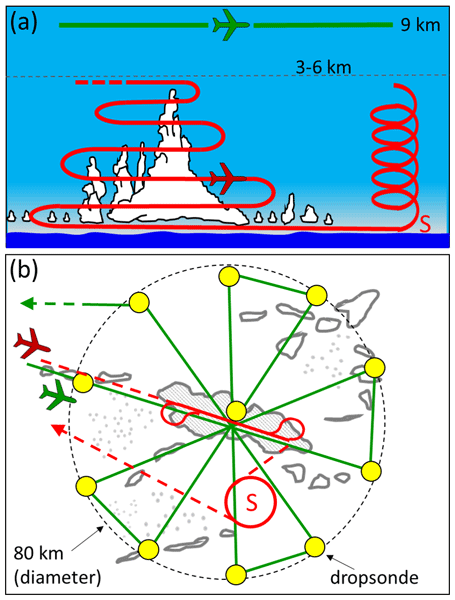
Marine clouds are found to clump together in regions or lines, readily discernible from satellite images of the ocean. While clustering is also a feature of deep storm clouds, we focus on smaller cloud systems associated with fair weather and brief localized showers. Two aircraft sampled the region around these shallow systems: one incorporated measurements taken within, adjacent to, and below the clouds, while the other provided a survey from above using remote sensing techniques.
Federica Castino, Feijia Yin, Volker Grewe, Hiroshi Yamashita, Sigrun Matthes, Simone Dietmüller, Sabine Baumann, Manuel Soler, Abolfazl Simorgh, Maximilian Mendiguchia Meuser, Florian Linke, and Benjamin Lührs
Geosci. Model Dev., 17, 4031–4052, https://doi.org/10.5194/gmd-17-4031-2024, https://doi.org/10.5194/gmd-17-4031-2024, 2024
Short summary
Short summary
We introduce SolFinder 1.0, a decision-making tool to select trade-offs between different objective functions for optimal aircraft trajectories, including fuel use, flight time, NOx emissions, contrail distance, and climate impact. The module is included in the AirTraf 3.0 submodel and uses weather conditions simulated by the EMAC atmospheric model. This paper focuses on the ability of SolFinder to identify eco-efficient trajectories, reducing a flight's climate impact at limited cost penalties.
Dario Sperber and Klaus Gierens
Atmos. Chem. Phys., 23, 15609–15627, https://doi.org/10.5194/acp-23-15609-2023, https://doi.org/10.5194/acp-23-15609-2023, 2023
Short summary
Short summary
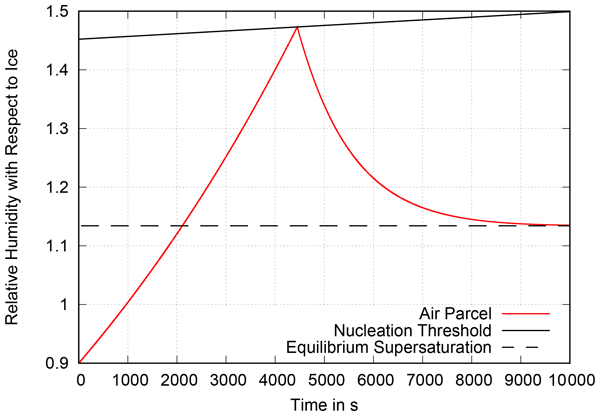
A significant share of aviation's climate impact is due to persistent contrails. Avoiding their creation is a step toward sustainable air transportation. For this purpose, a reliable forecast of so-called ice-supersaturated regions is needed, which then allows one to plan aircraft routes without persistent contrails. Here, we propose a method that leads to the better prediction of ice-supersaturated regions.
Sigrun Matthes, Simone Dietmüller, Katrin Dahlmann, Christine Frömming, Patrick Peter, Hiroshi Yamashita, Volker Grewe, Feijia Yin, and Federica Castino
Geosci. Model Dev. Discuss., https://doi.org/10.5194/gmd-2023-92, https://doi.org/10.5194/gmd-2023-92, 2023
Revised manuscript not accepted
Short summary
Short summary
Aviation aims to reduce its climate effect by identifying alternative climate-optimized aircraft trajectories. Such routing strategies requires a dedicated meteorological service in order to inform on regions of the atmosphere where aviation non-CO2 emissions have a large climate effect, e.g. by contrail formation or nitrogen-oxide (NOx)-induced ozone formation. This study presents calibration factors for individual non-CO2 effects by comparing with the climate response model AirClim.
Elena De La Torre Castro, Tina Jurkat-Witschas, Armin Afchine, Volker Grewe, Valerian Hahn, Simon Kirschler, Martina Krämer, Johannes Lucke, Nicole Spelten, Heini Wernli, Martin Zöger, and Christiane Voigt
Atmos. Chem. Phys., 23, 13167–13189, https://doi.org/10.5194/acp-23-13167-2023, https://doi.org/10.5194/acp-23-13167-2023, 2023
Short summary
Short summary
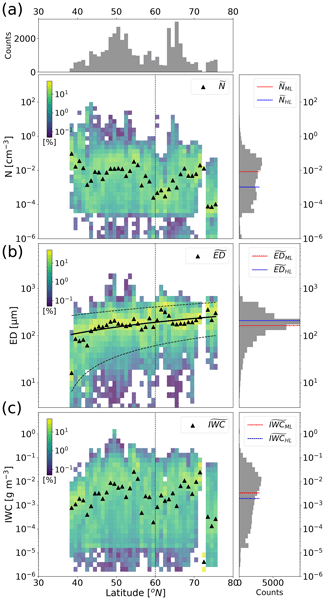
In this study, we show the differences in the microphysical properties between high-latitude (HL) cirrus and mid-latitude (ML) cirrus over the Arctic, North Atlantic, and central Europe during summer. The in situ measurements are combined with backward trajectories to investigate the influence of the region on cloud formation. We show that HL cirrus are characterized by a lower concentration of larger ice crystals when compared to ML cirrus.
Simon Kirschler, Christiane Voigt, Bruce E. Anderson, Gao Chen, Ewan C. Crosbie, Richard A. Ferrare, Valerian Hahn, Johnathan W. Hair, Stefan Kaufmann, Richard H. Moore, David Painemal, Claire E. Robinson, Kevin J. Sanchez, Amy J. Scarino, Taylor J. Shingler, Michael A. Shook, Kenneth L. Thornhill, Edward L. Winstead, Luke D. Ziemba, and Armin Sorooshian
Atmos. Chem. Phys., 23, 10731–10750, https://doi.org/10.5194/acp-23-10731-2023, https://doi.org/10.5194/acp-23-10731-2023, 2023
Short summary
Short summary
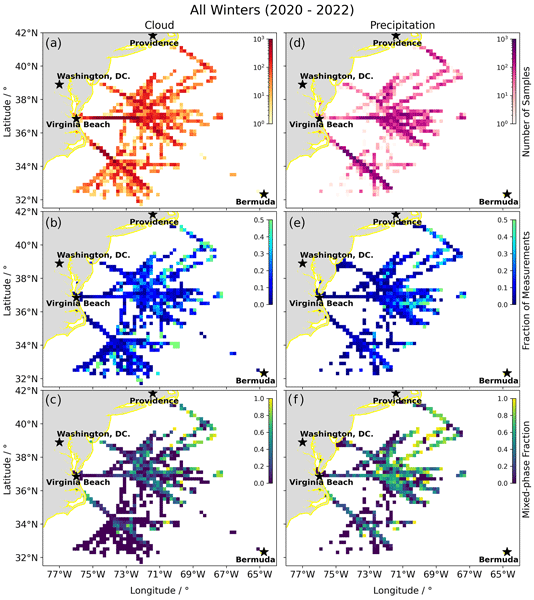
In this study we present an overview of liquid and mixed-phase clouds and precipitation in the marine boundary layer over the western North Atlantic Ocean. We compare microphysical properties of pure liquid clouds to mixed-phase clouds and show that the initiation of the ice phase in mixed-phase clouds promotes precipitation. The observational data presented in this study are well suited for investigating the processes that give rise to liquid and mixed-phase clouds, ice, and precipitation.
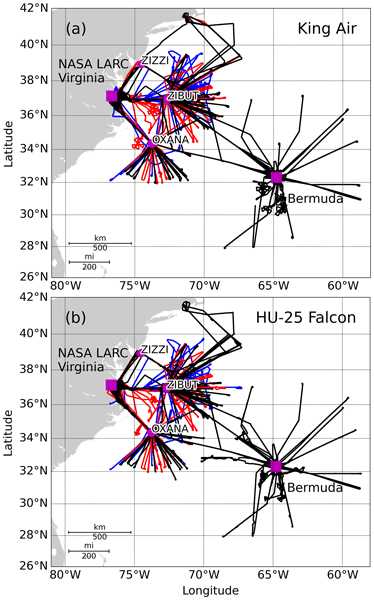
Armin Sorooshian, Mikhail D. Alexandrov, Adam D. Bell, Ryan Bennett, Grace Betito, Sharon P. Burton, Megan E. Buzanowicz, Brian Cairns, Eduard V. Chemyakin, Gao Chen, Yonghoon Choi, Brian L. Collister, Anthony L. Cook, Andrea F. Corral, Ewan C. Crosbie, Bastiaan van Diedenhoven, Joshua P. DiGangi, Glenn S. Diskin, Sanja Dmitrovic, Eva-Lou Edwards, Marta A. Fenn, Richard A. Ferrare, David van Gilst, Johnathan W. Hair, David B. Harper, Miguel Ricardo A. Hilario, Chris A. Hostetler, Nathan Jester, Michael Jones, Simon Kirschler, Mary M. Kleb, John M. Kusterer, Sean Leavor, Joseph W. Lee, Hongyu Liu, Kayla McCauley, Richard H. Moore, Joseph Nied, Anthony Notari, John B. Nowak, David Painemal, Kasey E. Phillips, Claire E. Robinson, Amy Jo Scarino, Joseph S. Schlosser, Shane T. Seaman, Chellappan Seethala, Taylor J. Shingler, Michael A. Shook, Kenneth A. Sinclair, William L. Smith Jr., Douglas A. Spangenberg, Snorre A. Stamnes, Kenneth L. Thornhill, Christiane Voigt, Holger Vömel, Andrzej P. Wasilewski, Hailong Wang, Edward L. Winstead, Kira Zeider, Xubin Zeng, Bo Zhang, Luke D. Ziemba, and Paquita Zuidema
Earth Syst. Sci. Data, 15, 3419–3472, https://doi.org/10.5194/essd-15-3419-2023, https://doi.org/10.5194/essd-15-3419-2023, 2023
Short summary
Short summary
The NASA Aerosol Cloud meTeorology Interactions oVer the western ATlantic Experiment (ACTIVATE) produced a unique dataset for research into aerosol–cloud–meteorology interactions. HU-25 Falcon and King Air aircraft conducted systematic and spatially coordinated flights over the northwest Atlantic Ocean. This paper describes the ACTIVATE flight strategy, instrument and complementary dataset products, data access and usage details, and data application notes.
Simone Dietmüller, Sigrun Matthes, Katrin Dahlmann, Hiroshi Yamashita, Abolfazl Simorgh, Manuel Soler, Florian Linke, Benjamin Lührs, Maximilian M. Meuser, Christian Weder, Volker Grewe, Feijia Yin, and Federica Castino
Geosci. Model Dev., 16, 4405–4425, https://doi.org/10.5194/gmd-16-4405-2023, https://doi.org/10.5194/gmd-16-4405-2023, 2023
Short summary
Short summary
Climate-optimized aircraft trajectories avoid atmospheric regions with a large climate impact due to aviation emissions. This requires spatially and temporally resolved information on aviation's climate impact. We propose using algorithmic climate change functions (aCCFs) for CO2 and non-CO2 effects (ozone, methane, water vapor, contrail cirrus). Merged aCCFs combine individual aCCFs by assuming aircraft-specific parameters and climate metrics. Technically this is done with a Python library.
Abolfazl Simorgh, Manuel Soler, Daniel González-Arribas, Florian Linke, Benjamin Lührs, Maximilian M. Meuser, Simone Dietmüller, Sigrun Matthes, Hiroshi Yamashita, Feijia Yin, Federica Castino, Volker Grewe, and Sabine Baumann
Geosci. Model Dev., 16, 3723–3748, https://doi.org/10.5194/gmd-16-3723-2023, https://doi.org/10.5194/gmd-16-3723-2023, 2023
Short summary
Short summary
This paper addresses the robust climate optimal trajectory planning problem under uncertain meteorological conditions within the structured airspace. Based on the optimization methodology, a Python library has been developed, which can be accessed using the following DOI: https://doi.org/10.5281/zenodo.7121862. The developed tool is capable of providing robust trajectories taking into account all probable realizations of meteorological conditions provided by an EPS computationally very fast.
Robin N. Thor, Malte Niklaß, Katrin Dahlmann, Florian Linke, Volker Grewe, and Sigrun Matthes
Geosci. Model Dev. Discuss., https://doi.org/10.5194/gmd-2023-126, https://doi.org/10.5194/gmd-2023-126, 2023
Preprint withdrawn
Short summary
Short summary
We develop a simplied method to estimate the climate effects of single flights through CO2 and non-CO2 effects, exclusively based on the aircraft seat category as well as the origin and destination airports. The derived climate effect functions exhibit a mean relative error of only 15 % with respect to results from a climate response model. The method is designed for climate footprint assessments and covers most commerical airlines with seat capacities starting from 101 passengers.
Feijia Yin, Volker Grewe, Federica Castino, Pratik Rao, Sigrun Matthes, Katrin Dahlmann, Simone Dietmüller, Christine Frömming, Hiroshi Yamashita, Patrick Peter, Emma Klingaman, Keith P. Shine, Benjamin Lührs, and Florian Linke
Geosci. Model Dev., 16, 3313–3334, https://doi.org/10.5194/gmd-16-3313-2023, https://doi.org/10.5194/gmd-16-3313-2023, 2023
Short summary
Short summary
This paper describes a newly developed submodel ACCF V1.0 based on the MESSy 2.53.0 infrastructure. The ACCF V1.0 is based on the prototype algorithmic climate change functions (aCCFs) v1.0 to enable climate-optimized flight trajectories. One highlight of this paper is that we describe a consistent full set of aCCFs formulas with respect to fuel scenario and metrics. We demonstrate the usage of the ACCF submodel using AirTraf V2.0 to optimize trajectories for cost and climate impact.
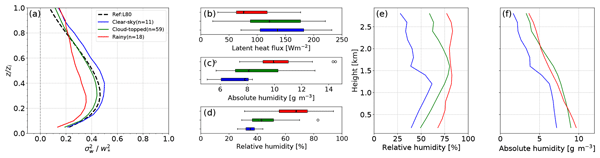
Noviana Dewani, Mirjana Sakradzija, Linda Schlemmer, Ronny Leinweber, and Juerg Schmidli
Atmos. Chem. Phys., 23, 4045–4058, https://doi.org/10.5194/acp-23-4045-2023, https://doi.org/10.5194/acp-23-4045-2023, 2023
Short summary
Short summary
A high daily variability of the normalized vertical velocity variance profiles in the convective boundary layer is observed using Doppler lidar data during the FESSTVaL campaign 2020–2021. The dependency of the normalized vertical velocity variance on several meteorological parameters explains that the moisture processes in the boundary layer contribute to the remaining variability. The finding suggests that a new vertical velocity scale that takes moist processes into account has to be defined.
Robin N. Thor, Mariano Mertens, Sigrun Matthes, Mattia Righi, Johannes Hendricks, Sabine Brinkop, Phoebe Graf, Volker Grewe, Patrick Jöckel, and Steven Smith
Geosci. Model Dev., 16, 1459–1466, https://doi.org/10.5194/gmd-16-1459-2023, https://doi.org/10.5194/gmd-16-1459-2023, 2023
Short summary
Short summary
We report on an inconsistency in the latitudinal distribution of aviation emissions between two versions of a data product which is widely used by researchers. From the available documentation, we do not expect such an inconsistency. We run a chemistry–climate model to compute the effect of the inconsistency in emissions on atmospheric chemistry and radiation and find that the radiative forcing associated with aviation ozone is 7.6 % higher when using the less recent version of the data.
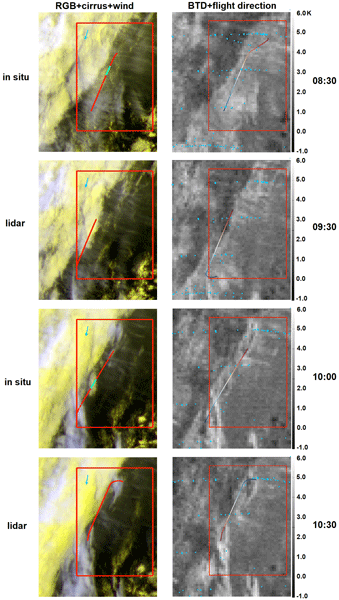
Ziming Wang, Luca Bugliaro, Tina Jurkat-Witschas, Romy Heller, Ulrike Burkhardt, Helmut Ziereis, Georgios Dekoutsidis, Martin Wirth, Silke Groß, Simon Kirschler, Stefan Kaufmann, and Christiane Voigt
Atmos. Chem. Phys., 23, 1941–1961, https://doi.org/10.5194/acp-23-1941-2023, https://doi.org/10.5194/acp-23-1941-2023, 2023
Short summary
Short summary
Differences in the microphysical properties of contrail cirrus and natural cirrus in a contrail outbreak situation during the ML-CIRRUS campaign over the North Atlantic flight corridor can be observed from in situ measurements. The cirrus radiative effect in the area of the outbreak, derived from satellite observation-based radiative transfer modeling, is warming in the early morning and cooling during the day.
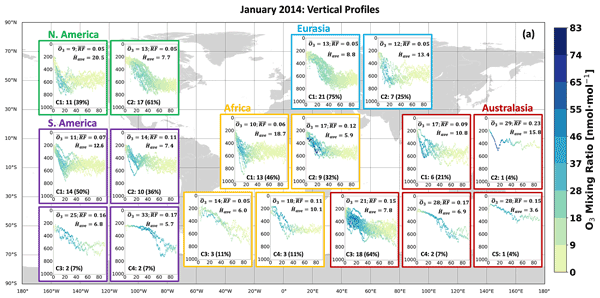
Jin Maruhashi, Volker Grewe, Christine Frömming, Patrick Jöckel, and Irene C. Dedoussi
Atmos. Chem. Phys., 22, 14253–14282, https://doi.org/10.5194/acp-22-14253-2022, https://doi.org/10.5194/acp-22-14253-2022, 2022
Short summary
Short summary
Aviation NOx emissions lead to the formation of ozone in the atmosphere in the short term, which has a climate warming effect. This study uses global-scale simulations to characterize the transport patterns between NOx emissions at an altitude of ~ 10.4 km and the resulting ozone. Results show a strong spatial and temporal dependence of NOx in disturbing atmospheric O3 concentrations, with the location that is most impacted in terms of warming not necessarily coinciding with the emission region.

Hossein Dadashazar, Andrea F. Corral, Ewan Crosbie, Sanja Dmitrovic, Simon Kirschler, Kayla McCauley, Richard Moore, Claire Robinson, Joseph S. Schlosser, Michael Shook, K. Lee Thornhill, Christiane Voigt, Edward Winstead, Luke Ziemba, and Armin Sorooshian
Atmos. Chem. Phys., 22, 13897–13913, https://doi.org/10.5194/acp-22-13897-2022, https://doi.org/10.5194/acp-22-13897-2022, 2022
Short summary
Short summary
Multi-season airborne data over the northwestern Atlantic show that organic mass fraction and the relative amount of oxygenated organics within that fraction are enhanced in droplet residual particles as compared to particles below and above cloud. In-cloud aqueous processing is shown to be a potential driver of this compositional shift in cloud. This implies that aerosol–cloud interactions in the region reduce aerosol hygroscopicity due to the jump in the organic : sulfate ratio in cloud.
Etienne Terrenoire, Didier A. Hauglustaine, Yann Cohen, Anne Cozic, Richard Valorso, Franck Lefèvre, and Sigrun Matthes
Atmos. Chem. Phys., 22, 11987–12023, https://doi.org/10.5194/acp-22-11987-2022, https://doi.org/10.5194/acp-22-11987-2022, 2022
Short summary
Short summary
Aviation NOx emissions not only have an impact on global climate by changing ozone and methane levels in the atmosphere, but also contribute to the deterioration of local air quality. The LMDZ-INCA global model is applied to re-evaluate the impact of aircraft NOx and aerosol emissions on climate. We investigate the impact of present-day and future (2050) aircraft emissions on atmospheric composition and the associated radiative forcings of climate for ozone, methane and aerosol direct forcings.

Simon Kirschler, Christiane Voigt, Bruce Anderson, Ramon Campos Braga, Gao Chen, Andrea F. Corral, Ewan Crosbie, Hossein Dadashazar, Richard A. Ferrare, Valerian Hahn, Johannes Hendricks, Stefan Kaufmann, Richard Moore, Mira L. Pöhlker, Claire Robinson, Amy J. Scarino, Dominik Schollmayer, Michael A. Shook, K. Lee Thornhill, Edward Winstead, Luke D. Ziemba, and Armin Sorooshian
Atmos. Chem. Phys., 22, 8299–8319, https://doi.org/10.5194/acp-22-8299-2022, https://doi.org/10.5194/acp-22-8299-2022, 2022
Short summary
Short summary
In this study we show that the vertical velocity dominantly impacts the cloud droplet number concentration (NC) of low-level clouds over the western North Atlantic in the winter and summer season, while the cloud condensation nuclei concentration, aerosol size distribution and chemical composition impact NC within a season. The observational data presented in this study can evaluate and improve the representation of aerosol–cloud interactions for a wide range of conditions.

Klaus Gierens, Lena Wilhelm, Sina Hofer, and Susanne Rohs
Atmos. Chem. Phys., 22, 7699–7712, https://doi.org/10.5194/acp-22-7699-2022, https://doi.org/10.5194/acp-22-7699-2022, 2022
Short summary
Short summary
We are interested in the prediction of condensation trails, in particular strong ones. For this we need a good forecast of temperature and humidity in the levels where aircraft cruise. Unfortunately, the humidity forecast is quite difficult for these levels, in particular the ice supersaturation, which is needed for long-lasting contrails. We are thus seeking proxy variables that help distinguish situations where strong contrails can form, for instance the lapse rate.
Mireia Papke Chica, Valerian Hahn, Tiziana Braeuer, Elena de la Torre Castro, Florian Ewald, Mathias Gergely, Simon Kirschler, Luca Bugliaro Goggia, Stefanie Knobloch, Martina Kraemer, Johannes Lucke, Johanna Mayer, Raphael Maerkl, Manuel Moser, Laura Tomsche, Tina Jurkat-Witschas, Martin Zoeger, Christian von Savigny, and Christiane Voigt
Atmos. Chem. Phys. Discuss., https://doi.org/10.5194/acp-2022-255, https://doi.org/10.5194/acp-2022-255, 2022
Preprint withdrawn
Short summary
Short summary
The mixed-phase temperature regime in convective clouds challenges our understanding of microphysical and radiative cloud properties. We provide a rare and unique dataset of aircraft in situ measurements in a strong mid-latitude convective system. We find that mechanisms initiating ice nucleation and growth strongly depend on temperature, relative humidity, and vertical velocity and variate within the measured system, resulting in altitude dependent changes of the cloud liquid and ice fraction.
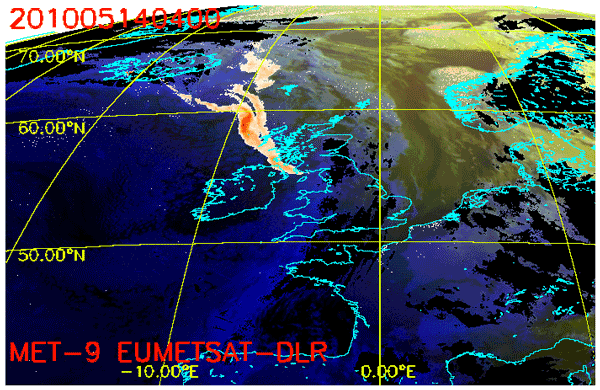
Luca Bugliaro, Dennis Piontek, Stephan Kox, Marius Schmidl, Bernhard Mayer, Richard Müller, Margarita Vázquez-Navarro, Daniel M. Peters, Roy G. Grainger, Josef Gasteiger, and Jayanta Kar
Nat. Hazards Earth Syst. Sci., 22, 1029–1054, https://doi.org/10.5194/nhess-22-1029-2022, https://doi.org/10.5194/nhess-22-1029-2022, 2022
Short summary
Short summary
The monitoring of ash dispersion in the atmosphere is an important task for satellite remote sensing since ash represents a threat to air traffic. We present an AI-based method that retrieves the spatial extension and properties of volcanic ash clouds with high temporal resolution during day and night by means of geostationary satellite measurements. This algorithm, trained on realistic observations simulated with a radiative transfer model, runs operationally at the German Weather Service.
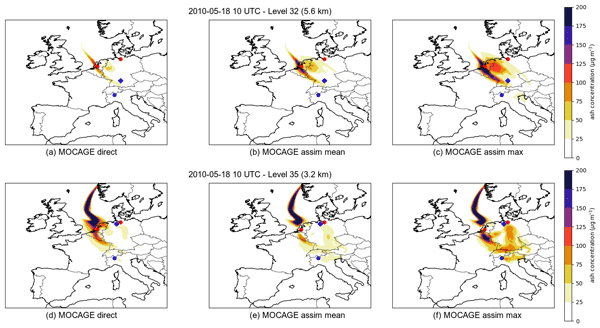
Matthieu Plu, Guillaume Bigeard, Bojan Sič, Emanuele Emili, Luca Bugliaro, Laaziz El Amraoui, Jonathan Guth, Beatrice Josse, Lucia Mona, and Dennis Piontek
Nat. Hazards Earth Syst. Sci., 21, 3731–3747, https://doi.org/10.5194/nhess-21-3731-2021, https://doi.org/10.5194/nhess-21-3731-2021, 2021
Short summary
Short summary
Volcanic eruptions that spread out ash over large areas, like Eyjafjallajökull in 2010, may have huge economic consequences due to flight cancellations. In this article, we demonstrate the benefits of source term improvement and of data assimilation for quantifying volcanic ash concentrations. The work, which was supported by the EUNADICS-AV project, is the first one, to our knowledge, that demonstrates the benefit of the assimilation of ground-based lidar data over Europe during an eruption.
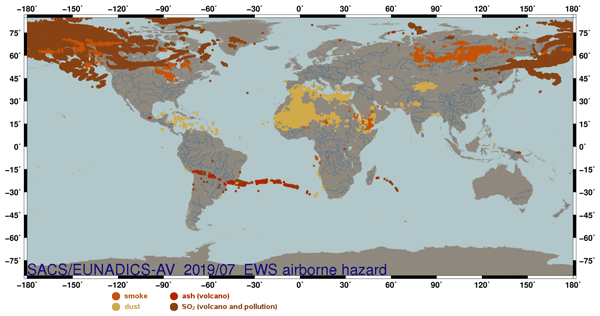
Hugues Brenot, Nicolas Theys, Lieven Clarisse, Jeroen van Gent, Daniel R. Hurtmans, Sophie Vandenbussche, Nikolaos Papagiannopoulos, Lucia Mona, Timo Virtanen, Andreas Uppstu, Mikhail Sofiev, Luca Bugliaro, Margarita Vázquez-Navarro, Pascal Hedelt, Michelle Maree Parks, Sara Barsotti, Mauro Coltelli, William Moreland, Simona Scollo, Giuseppe Salerno, Delia Arnold-Arias, Marcus Hirtl, Tuomas Peltonen, Juhani Lahtinen, Klaus Sievers, Florian Lipok, Rolf Rüfenacht, Alexander Haefele, Maxime Hervo, Saskia Wagenaar, Wim Som de Cerff, Jos de Laat, Arnoud Apituley, Piet Stammes, Quentin Laffineur, Andy Delcloo, Robertson Lennart, Carl-Herbert Rokitansky, Arturo Vargas, Markus Kerschbaum, Christian Resch, Raimund Zopp, Matthieu Plu, Vincent-Henri Peuch, Michel Van Roozendael, and Gerhard Wotawa
Nat. Hazards Earth Syst. Sci., 21, 3367–3405, https://doi.org/10.5194/nhess-21-3367-2021, https://doi.org/10.5194/nhess-21-3367-2021, 2021
Short summary
Short summary
The purpose of the EUNADICS-AV (European Natural Airborne Disaster Information and Coordination System for Aviation) prototype early warning system (EWS) is to develop the combined use of harmonised data products from satellite, ground-based and in situ instruments to produce alerts of airborne hazards (volcanic, dust, smoke and radionuclide clouds), satisfying the requirement of aviation air traffic management (ATM) stakeholders (https://cordis.europa.eu/project/id/723986).

Hossein Dadashazar, Majid Alipanah, Miguel Ricardo A. Hilario, Ewan Crosbie, Simon Kirschler, Hongyu Liu, Richard H. Moore, Andrew J. Peters, Amy Jo Scarino, Michael Shook, K. Lee Thornhill, Christiane Voigt, Hailong Wang, Edward Winstead, Bo Zhang, Luke Ziemba, and Armin Sorooshian
Atmos. Chem. Phys., 21, 16121–16141, https://doi.org/10.5194/acp-21-16121-2021, https://doi.org/10.5194/acp-21-16121-2021, 2021
Short summary
Short summary
This study investigates precipitation impacts on long-range transport of North American outflow over the western North Atlantic Ocean (WNAO). Results demonstrate that precipitation scavenging plays a significant role in modifying surface aerosol concentrations over the WNAO, especially in winter and spring due to large-scale scavenging processes. This study highlights how precipitation impacts surface aerosol properties with relevance for other marine regions vulnerable to continental outflow.
Cited articles
Akhtar Martínez, C., Eastham, S. D., and Jarrett, J. P.: Zero-dimensional contrail models could underpredict lifetime optical depth, Atmos. Chem. Phys., 25, 12875–12891, https://doi.org/10.5194/acp-25-12875-2025, 2025.
AKKL (Arbeitskreis Klimaneutrale Luftfahrt): Zentrale Handlungsfelder auf dem Weg zu einem Umwelt- und Klimaschonenden Luftverkehrssystem der Zukunft, Technical report, Bundesministerium für Digitales und Verkehr sowie für Wirtschaft und Klimaschutz, https://www.bdli.de/sites/default/files/2024-06/mantelpapier-ergebnisse-akkl.pdf (last access: 4 December 2024), 2024.
Arrowsmith, S., Lee, D. S., Owen, B., Faber, J., van Wijngaarden, L., Boucher, O., Celikel, A., Deransy, R., Fuglestvedt, J., Laukia, J., Tronstad Lund, M., Sausen, R., Schaefer, M., Skowron, A., Stromatas, S., and Watt, A.: Updated analysis of the non-CO2 climate impacts of aviation and potential policy measures pursuant to the EU Emissions Trading System Directive Article 30, EASA-Report, 115 pp., https://www.easa.europa.eu/en/downloads/120860/en (last access: 12 January 2026), 2020.
Borella, A., Boucher, O., Shine, K. P., Stettler, M., Tanaka, K., Teoh, R., and Bellouin, N.: The importance of an informed choice of CO2-equivalence metrics for contrail avoidance, Atmos. Chem. Phys., 24, 9401–9417, https://doi.org/10.5194/acp-24-9401-2024, 2024.
Chevallier, R., Shapiro, M., Engberg, Z., Soler, M., and Delahaye, D.: Linear contrails detection, tracking and matching with aircraft using geostationary satellite and air traffic data, Aerospace, 10, 578, https://doi.org/10.3390/aerospace10070578, 2023.
Dahlmann, K., Matthes, S., and Grewe, V.: Conversion factors from radiative forcing to aviation climate metrics, Meteorol. Z., early online access, https://doi.org/10.1127/metz/1288, 2026.
Dekoutsidis, G., Groß, S., Wirth, M., Krämer, M., and Rolf, C.: Characteristics of supersaturation in midlatitude cirrus clouds and their adjacent cloud-free air, Atmos. Chem. Phys., 23, 3103–3117, https://doi.org/10.5194/acp-23-3103-2023, 2023.
Dietmüller, S., Matthes, S., Dahlmann, K., Yamashita, H., Simorgh, A., Soler, M., Linke, F., Lührs, B., Meuser, M. M., Weder, C., Grewe, V., Yin, F., and Castino, F.: A Python library for computing individual and merged non-CO2 algorithmic climate change functions: CLIMaCCF V1.0, Geosci. Model Dev., 16, 4405–4425, https://doi.org/10.5194/gmd-16-4405-2023, 2023.
Dietmüller, S., Matthes, S., Peter, P., Kirschler., S., and Piontek, D.: Night-time contrail response over North Atlantic flight corridor: a model inter-comparison of contrail aCCF and grid-based CoCiP, Meteorol. Z., in preparation, 2026.
DuBois, D. and Paynter, G. C.: `Fuel Flow Method2' for Estimating Aircraft Emissions, SAE Trans., 115, 1–14, 2006.
Duda, D. P., Minnis, P., Nguyen, L., and Palikonda, R.: A Case Study of the Development of Contrail Clusters over the Great Lakes, J. Atmos. Sci., 61, 1132–1146, https://doi.org/10.1175/1520-0469(2004)061<1132:ACSOTD>2.0.CO;2, 2004.
Duda, D. P., Minnis, P., Khlopenkov, K., Chee, T. L., and Boeke, R.: Estimation of 2006 Northern Hemisphere contrail coverage using MODIS data, Geophys. Res. Lett., 40, 612–617, https://doi.org/10.1002/grl.50097, 2013.
Engberg, Z., Teoh, R., Abbott, T., Dean, T., Stettler, M. E. J., and Shapiro, M. L.: Forecasting contrail climate forcing for flight planning and air traffic management applications: the CocipGrid model in pycontrails 0.51.0, Geosci. Model Dev., 18, 253–286, https://doi.org/10.5194/gmd-18-253-2025, 2025.
Fichter, C., Marquart, S., Sausen, R., and Lee, D. S.: The impact of cruise altitude on contrails and related radiative forcing, Meteorol. Z., 14, 563–572, https://doi.org/10.1175/1520-0469(2004)061<1132:ACSOTD>2.0.CO;2, 2005.
Frömming, C., Ponater, M., Dahlmann, K., Grewe, V., Lee, D. S., and Sausen, R.: Aviation-induced radiative forcing and surface temperature change in dependency of the emission altitude, J. Geophys. Res., 117, D19104, https://doi.org/10.1029/2012JD018204, 2012.
Frömming, C., Grewe, V., Brinkop, S., Jöckel, P., Haslerud, A. S., Rosanka, S., van Manen, J., and Matthes, S.: Influence of weather situation on non-CO2 aviation climate effects: the REACT4C climate change functions, Atmos. Chem. Phys., 21, 9151–9172, https://doi.org/10.5194/acp-21-9151-2021, 2021.
Frömming, C., Grewe, V., Matthes, S., Dietmüller, S., Peter, P., Dahlmann, K., and Jöckel, P.: Expanding spatial and temporal coverage of climate change functions: Assessment and comparison with aCCFs, J. Env. Com. Air Transp. Sys. Discuss. [preprint], https://doi.org/10.5194/jecats-2026-7, in review, 2026.
Gierens, K.: Transmission formulation for random stacks of clouds, Meteorol. Z., 33, 51–54, https://doi.org/10.1127/metz/2023/1186, 2023.
Gierens, K.: The utility of partial contrail avoidance, Meteorol. Z., early online, https://doi.org/10.1127/metz/1275, 2025.
Gierens, K. M. and Vázquez-Navarro, M.: Statistical analysis of contrail lifetimes from a satellite perspective, Meteorol. Z., 27, 183–193, https://doi.org/10.1127/metz/2018/0888, 2018.
Gierens, K., Matthes, S., and Rohs, S.: How Well Can Persistent Contrails Be Predicted?, Aerospace, 7, 169, https://doi.org/10.3390/aerospace7120169, 2020.
Gierens, K., Wilhelm, L., Hofer, S., and Rohs, S.: The effect of ice supersaturation and thin cirrus on lapse rates in the upper troposphere, Atmos. Chem. Phys., 22, 7699–7712, https://doi.org/10.5194/acp-22-7699-2022, 2022.
Grewe, V., Frömming, C., Matthes, S., Brinkop, S., Ponater, M., Dietmüller, S., Jöckel, P., Garny, H., Tsati, E., Dahlmann, K., Søvde, O. A., Fuglestvedt, J., Berntsen, T. K., Shine, K. P., Irvine, E. A., Champougny, T., and Hullah, P.: Aircraft routing with minimal climate impact: the REACT4C climate cost function modelling approach (V1.0), Geosci. Model Dev., 7, 175–201, https://doi.org/10.5194/gmd-7-175-2014, 2014.
Grewe, V., Matthes, S., Frömming, C., Brinkop, S., Jöckel, P., Gierens, K. M., Champougny, T., Fuglestvedt, J., Haslerud, A., Irvine, E. A., and Shine, K.: Feasibility of climate-optimized air traffic routing for trans-Atlantic flights, Environ. Res. Lett., 12, 34003, https://doi.org/10.1088/1748-9326/aa5ba0, 2017.
Grewe, V., Gangoli Rao, A., Grönstedt, T., Xisto, C., Linke, F., Melkert, J., Middel, J., Ohlenforst, B., Blakey, S., Christie, S., Matthes, S., and Dahlmann, K.: Evaluating the climate impact of aviation emission scenarios towards the Paris agreement including COVID-19 effects, Nat. Commun., 12, 3841, https://doi.org/10.1038/s41467-021-24091-y, 2021.
Hanst, M., Köhler, C. G., Seifert, A., and Schlemmer, L.: Predicting ice supersaturation for contrail avoidance: ensemble forecasting using ICON with two-moment ice microphysics, Atmos. Chem. Phys., 25, 17253–17274, https://doi.org/10.5194/acp-25-17253-2025, 2025.
Hofer, S., Gierens, K., and Rohs, S.: How well can persistent contrails be predicted? An update, Atmos. Chem. Phys., 24, 7911–7925, https://doi.org/10.5194/acp-24-7911-2024, 2024.
International Council of Clean Transportation (ICCT): Aviation Vision 2050: The potential for climate-neutral growth, https://theicct.org/publication/aviation-vision-2050-sept25/ (last access: 2 October 2026), 2025.
International Transport Forum (ITF): Transport Outlook 2012: Seamless Transport for Greener Growth, https://www.itf-oecd.org/sites/default/files/docs/12outlook.pdf (last access: 29 January 2026), 2012.
Klöwer, M., Allen, M. R., Lee, D. S., Proud, S. R., Gallagher, L., and Skowron, A.: Quantifying aviation's contribution to global warming, Environ. Res. Lett., 16, 104027, https://doi.org/10.1088/1748-9326/ac286e, 2021.
Köhler, C. G. and Seifert, A.: Identifying sensitivities for cirrus modelling using a two-moment two-mode bulk microphysics scheme, Tellus B, 67, 24494, https://doi.org/10.3402/tellusb.v67.24494, 2015.
Kulik, L.: Satellite-based detection of contrails using deep learning, Ph.D. thesis, Massachusetts Institute of Technology, 2019.
Lau, A., Ehlers, T., Derra, M., and Lührs, B.: Considerations for multi-criteria Route Design on Different Atmospheric Scales, Proc. 33rd ICAS Congress, Stockholm, Sweden, 4–9 September 2022, https://www.icas.org/icas_archive/ICAS2022/data/papers/ICAS2022_0844_paper.pdf (last access: 12 January 2026), 2022.
Lee, D. S., Pitari, G., Grewe, V., Gierens, K., Penner, J. E., Petzold, A., Prather, M. J., Schumann, U., Bais, A., Berntsen, T., Iachetti, D., Lim, L. L., and Sausen, R.: Transport impacts on atmosphere and climate: Aviation, Atmos. Environ., 44, 4678–4734, https://doi.org/10.1016/j.atmosenv.2009.06.005, 2010.
Lee, D. S., Fahey, D. W., Skowron, A., Allen, M. R., Burkhardt, U., Chen, Q., Doherty, S. J., Freeman, S., Forster, P. M., Fuglestvedt, J., Gettelman, A., DeLeon, R. R., Lim, L. L., Lund, M. T., Millar, T. J., Owen, B., Penner, J. E., Pitari, G., Prather, M. J., Sausen, R., and Wilcox, L. J.: The contribution of global aviation to anthropogenic climate forcing for 2000 to 2018, Atmos. Environ., 244, 117834, https://doi.org/10.1016/j.atmosenv.2020.117834, 2021.
Linke, F.: Ökologische Analyse operationeller Lufttransportkonzepte, DLR-Forschungsbericht DLR-FB-2016-10, Dissertation, Technische Universität Hamburg-Harburg, https://elib.dlr.de/103182/ (last access: 2 October 2026), 2016.
Lührs, B., Niklaß, M., Frömming, C., Grewe, V., and Gollnick, V.: Cost-Benefit Assessment of 2D and 3D Climate and Weather Optimized Trajectories, 16th AIAA Aviation Technology, Integration, and Operations Conference (ATIO), Washington, DC, USA, https://doi.org/10.2514/6.2016-3758, 2016.
Lührs, B., Gollnick, V., Niklaß, M., Frömming, C., and Grewe, V.: Cost–benefit assessment of climate and weather optimized trajectories for different North Atlantic weather patterns, Proc. 31st ICAS Congress, Belo Horizonte, Brazil, 9–14 September 2018, https://www.icas.org/icas_archive/ICAS2018/data/papers/ICAS2018_0708_paper.pdf (last access: 3 June 2025), 2018.
Mannstein, H., Meyer, R., and Wendling, P.: Operational Detection of Contrails from NOAA-AVHRR-Data, Int. J. Remote Sens., 20, 1641–1660, https://doi.org/10.1016/j.atmosenv.2020.117834, 1999.
Mannstein, H., Brömser, A., and Bugliaro, L.: Ground-based observations for the validation of contrails and cirrus detection in satellite imagery, Atmos. Meas. Tech., 3, 655–669, https://doi.org/10.5194/amt-3-655-2010, 2010.
Matthes, S., Schumann, U., Grewe, V., Frömming, C., Dahlmann, K., Koch, A., and Mannstein, H.: Climate optimized air transport, in: Atmospheric Physics: Background – Methods – Trends, Research Topics in Aerospace, Springer, 727–746, ISBN 978-3-642-30182-7, 2012.
Matthes, S., Lührs, B., Dahlmann, K., Grewe, V., Linke, F., Yin, F., Klingaman, E., and Shine, K. P.: Climate-Optimized Trajectories and Robust Mitigation Potential: Flying ATM4E, Aerospace, 7, 156, https://doi.org/10.3390/aerospace7110156, 2020.
Matthes, S., Lim, L., Burkhardt, U., Dahlmann, K., Dietmüller, S., Grewe, V., Haslerud, A. S., Hendricks, J., Owen, B., Pitari, G., Righi, M., and Skowron, A.: Mitigation of Non-CO2 Aviation's Climate Impact by Changing Cruise Altitudes, Aerospace, 8, 36, https://doi.org/10.3390/aerospace8020036, 2021.
Matthes, S., Dietmüller, S., Dahlmann, K., Frömming, C., Peter, P., Yamashita, H., Grewe, V., Yin, F., and Castino, F.: Updated algorithmic climate change functions (aCCF) V1.0A: Evaluation with the climate-response model AirClim V2.0, Geosci. Model Dev. Discuss. [preprint], https://doi.org/10.5194/gmd-2023-92, 2023.
Megill, L., Deck, K., and Grewe, V.: Alternative climate metrics to the Global Warming Potential are more suitable for assessing aviation non-CO2 effects, Commun. Earth Environ., 5, 249, https://doi.org/10.1038/s43247-024-01423-6, 2024.
Meijer, V. R., Kulik, L., Eastham, S. D., Allroggen, F., Speth, R. L., Karaman, S., and Barrett, S. R.: Contrail coverage over the United States before and during the COVID-19 pandemic, Environ. Res. Lett., 17, 034039, https://doi.org/10.1088/1748-9326/ac26f0, 2022.
Ng, J. Y.-H., McCloskey, K., Cui, J., Meijer, V. R., Brand, E., Sarna, A., Goyal, N., Van Arsdale, C., and Geraedts, S.: Contrail Detection on GOES-16 ABI With the OpenContrails Dataset, IEEE T. Geosci. Remote, 62, 1–14, https://doi.org/10.1109/TGRS.2023.3345226, 2024.
Nuic, A. and Mouillet, V.: User manual for the base of aircraft data (BADA) family 4, EUROCONTROL Technical Report, 12, 22–58, https://www.eurocontrol.int/publication/user-manual-base-aircraft-data-bada (last access: 12 January 2026), 2012.
Peter, P., Matthes, S., Frömming, C., Jöckel, P., Bugliaro, L., Giez, A., Krämer, M., and Grewe, V.: Influence of temperature and humidity on contrail formation regions in the general circulation model EMAC: a spring case study, Atmos. Chem. Phys., 25, 5911–5934, https://doi.org/10.5194/acp-25-5911-2025, 2025.
Peter, P., Matthes, S., and Zengerling, Z.: Sensitivity of contrail-avoidance to meteorology and climate response models during the D-KULT trial flights (TF-100), Meteorol. Z., in review, 2026.
Poll, D. I. A. and Schumann, U.: An estimation method for the fuel burn and other performance characteristics of civil transport aircraft during cruise: part 2, determining the aircraft's characteristic parameters, Aeronaut. J., 125, 296–340, https://doi.org/10.1017/aer.2020.124, 2021.
Rao, P., Yin, F., Grewe, V., Yamashita, H., Jöckel, P., Matthes, S., Mertens, M., and Frömming, C.: Case Study for Testing the Validity of NOx-Ozone Algorithmic Climate Change Functions for Optimising Flight Trajectories, Aerospace, 9, 231, https://doi.org/10.3390/aerospace9050231, 2022.
Santos Gabriel, V., Bugliaro, L., Montag, M., Ries, S., Wang, Z., Widmaier, K., Arico, M., Unterstrasser, S., Mayer, J., Menekay, D., Marsing, A., de la Torre Castro, E., Megill, L., Scheibe, M., and Voigt, C.: A manually labeled contrail dataset from MSG/SEVIRI, Earth Syst. Sci. Data, 18, 2397–2412, https://doi.org/10.5194/essd-18-2397-2026, 2026a.
Sausen, R., Nodorp, D., and Land, C.: Towards an optimal flight routing with respect to minimal environmental impact. In: Impact of Emissions from Aircraft and Spacecraft upon the Atmosphere, ed. by: Schumann, U. and Wurzel, D., Proceedings of an International Scientific Colloquium, Köln, Germany, 18–20 April 1994, DLR Mitteilung 94-06, Oberpfaffenhofen and Köln, 473–478, https://elib.dlr.de/32348/ (last access: 2 October 2026), 1994.
Sausen, R., Nodorp, D., Land, C., and Deidewig, F.: Ermittlung optimaler Flughöhen und Flugrouten unter dem Aspekt minimaler Klimawirksamkeit, DLR-Forschungsbericht 96–13, 105 pp., https://elib.dlr.de/32161/ (last access: 2 October 2026), 1996.
Schmetz, J., Pili, P., Tjemkes, S., Just, D., Kerkmann, J., Rota, S., and Ratier, A.: An introduction to Meteosat Second Generation (MSG), B. Am. Meteorol. Soc., 83, 977–992, https://doi.org/10.1175/1520-0477(2002)083<0977:AITMSG>2.3.CO;2, 2002.
Schumann, U.: On the effect of emissions from aircraft engines on the state of the atmosphere, Ann. Geophys., 12, 365–384, https://doi.org/10.1007/s00585-994-0365-0, 1994.
Schumann, U.: On conditions for contrail formation from aircraft exhausts, Meteorol. Z., 5, 4–23, https://doi.org/10.3390/aerospace9050231, 1996.
Schumann, U.: A contrail cirrus prediction model, Geosci. Model Dev., 5, 543–580, https://doi.org/10.5194/gmd-5-543-2012, 2012.
Schumann, U. and Graf, K.: Aviation-induced cirrus and radiation changes at diurnal timescales, J. Geophys. Res.-Atmos., 118, 2404–2421, https://doi.org/10.1002/jgrd.50184, 2013.
Schumann, U., Mayer, B., Graf, K., and Mannstein, H.: A parametric radiative forcing model for contrail cirrus, J. Appl. Meteorol. Climatol., 51, 1391–1406, https://doi.org/10.1175/JAMC-D-11-0242.1, 2012.
Schumann, U., Baumann, R., Baumgardner, D., Bedka, S. T., Duda, D. P., Freudenthaler, V., Gayet, J.-F., Heymsfield, A. J., Minnis, P., Quante, M., Raschke, E., Schlager, H., Vázquez-Navarro, M., Voigt, C., and Wang, Z.: Properties of individual contrails: a compilation of observations and some comparisons, Atmos. Chem. Phys., 17, 403–438, https://doi.org/10.5194/acp-17-403-2017, 2017.
Schumann, U., Bugliaro, L., Dörnbrack, A., Baumann, R., and Voigt, C.: Aviation contrail cirrus and radiative forcing over Europe during 6 months of COVID-19, Geophys. Res. Lett., 48, e2021GL092771, https://doi.org/10.1029/2021GL092771, 2021.
Shapiro, M., Engberg, Z., Teoh, R., and Dean, T.: pycontrails: Python library for modeling aviation climate impacts (Version v0.39.4), Zenodo [software], https://doi.org/10.5281/zenodo.7776686, 2023.
Simorgh, A., Soler, M., González-Arribas, D., Matthes, S., Grewe, V., Dietmüller, S., Baumann, S., Yamashita, H., Yin, F., Castino, F., Linke, F., Lührs, B., and Mendiguchia Meuser, M.: A Comprehensive Survey on Climate Optimal Aircraft Trajectory Planning, Aerospace, 9, 146, https://doi.org/10.3390/aerospace9030146, 2022.
Sperber, D. and Gierens, K.: Towards a more reliable forecast of ice supersaturation: concept of a one-moment ice-cloud scheme that avoids saturation adjustment, Atmos. Chem. Phys., 23, 15609–15627, https://doi.org/10.5194/acp-23-15609-2023, 2023.
Teoh, R., Schumann, U., Majumdar, A., and Stettler, M. E. J.: Mitigating the climate forcing of aircraft contrails by small-scale diversions and technology adoption, Environ. Sci. Technol., 54, 2941–2950, https://doi.org/10.1021/acs.est.9b05608, 2020.
Teoh, R., Engberg, Z., Schumann, U., Voigt, C., Shapiro, M., Rohs, S., and Stettler, M. E. J.: Global aviation contrail climate effects from 2019 to 2021, Atmos. Chem. Phys., 24, 6071–6093, https://doi.org/10.5194/acp-24-6071-2024, 2024.
United Nations: UN Framework Convention on Climate Change, Adoption of the Paris Agreement, Conference of Parties, Twenty-first session Paris, FCCC/CP/2015/L.9/Rev.1, 30 November to 11 December 2015, 2015.
van Manen, J. and Grewe, V.: Algorithmic climate change functions for the use in eco-efficient flight planning, Transp. Res. Part D, 67, 388–405, https://doi.org/10.1016/j.trd.2018.12.016, 2019.
Vázquez-Navarro, M., Mannstein, H., and Kox, S.: Contrail life cycle and properties from 1 year of MSG/SEVIRI rapid-scan images, Atmos. Chem. Phys., 15, 8739–8749, https://doi.org/10.5194/acp-15-8739-2015, 2015.
Voigt, C., Schumann, U., Jurkat, T., Schäuble, D., Schlager, H., Petzold, A., Gayet, J.-F., Krämer, M., Schneider, J., Borrmann, S., Schmale, J., Jessberger, P., Hamburger, T., Lichtenstern, M., Scheibe, M., Gourbeyre, C., Meyer, J., Kübbeler, M., Frey, W., Kalesse, H., Butler, T., Lawrence, M. G., Holzäpfel, F., Arnold, F., Wendisch, M., Döpelheuer, A., Gottschaldt, K., Baumann, R., Zöger, M., Sölch, I., Rautenhaus, M., and Dörnbrack, A.: In-situ observations of young contrails – overview and selected results from the CONCERT campaign, Atmos. Chem. Phys., 10, 9039–9056, https://doi.org/10.5194/acp-10-9039-2010, 2010.
Voigt, C., Schumann, U., Minikin, A., Abdelmonem, A., Afchine, A., Borrmann, S., Boettcher, M., Buchholz, B., Bugliaro, L., Costa, A., Curtius, J., Dollner, M., Dörnbrack, A., Dreiling, V., Ebert, V., Ehrlich, A., Fix, A., Forster, L., Frank, F., Fütterer, D., Giez, A., Graf, K., Grooß, J.-U., Groß, S., Heimerl, K., Heinold, B., Hüneke, T., Järvinen, E., Jurkat, T., Kaufmann, S., Kenntner, M., Klingebiel, M., Klimach, T., Kohl, R., Krämer, M., Krisna, T.C., Luebke, A., Mayer, B., Mertes, S., Molleker, S., Petzold, A., Pfeilsticker, K., Port, M., Rapp, M., Reutter, P., Rolf, C., Rose, D., Sauer, D., Schäfler, A., Schlage, R., Schnaiter, M., Schneider, J., Spelten, N., Spichtinger, P, Stock, P., Walser, A., Weigel, R., Weinzierl, B., Wendisch, M., Werner, F., Wernli, H., Wirth, M., Zahn, A., Ziereis, H., and Zöger, M.: ML-CIRRUS: The Airborne Experiment on Natural Cirrus and Contrail Cirrus with the High-Altitude Long-Range Research Aircraft HALO, B. Am. Meteorol. Soc., 98, 271–288, https://doi.org/10.1175/BAMS-D-15-00213.1, 2017.
Voigt, C., Lelieveld, J., Schlager, H., Schneider, J., Curtius, J., Meerkötter, R., Sauer, D., Bugliaro, L., Bohn, B., Crowley, J. N., Erbertseder, T., Groß, S., Hahn, V., Li, Q., Mertens, M., Pöhlker, M. L., Pozzer, A., Schumann, U., Tomsche, L., Williams, J., Zahn, A., Andreae, M., Borrmann, S., Bräuer, T., Dörich, R., Dörnbrack, A., Edtbauer, A., Ernle, L., Fischer, H., Giez, A., Granzin, M., Grewe, V., Harder, H., Heinritzi, M., Holanda, B. A., Jöckel, P., Kaiser, K., Krüger, O. O., Lucke, J., Marsing, A., Martin, A., Matthes, S., Pöhlker, C., Pöschl, U., Reifenberg, S., Ringsdorf, A., Scheibe, M., Tadic, I., Zauner-Wieczorek, M., Henke, R., and Rapp, M.: Cleaner Skies during the COVID-19 Lockdown, B. Am. Meteorol. Soc., 103, E1796–E1827, https://doi.org/10.1175/BAMS-D-21-0012.1, 2022.
von Bonhorst, G.: Stability assessment of forecasts regarding ice supersaturation and persistent contrails, Master's thesis, Ludwig-Maximilians-Universität München, https://elib.dlr.de/213011/ (last access: 2 October 2026), 2024.
von Bonhorst, G., Maizet, M., and Gierens, K.: On contrail prediction under realistic weather forecast uncertainty, Meteorol. Z., early online, https://doi.org/10.1127/metz/1251, 2025.
von Koslowski, V. L. and Gierens, K.: Characteristics of robust and non-robust days for contrail forecasts, Meteorol. Z., in press, 2026.
Williams, V., Noland, R. B., and Toumi, R.: Reducing the climate change impacts of aviation by restricting cruise altitudes, Transp. Res. Part D, 7, 451–464, https://doi.org/10.1016/S1361-9209(02)00013-5, 2002.
Williams, V., Noland, R. B., and Toumi, R.: Air transport cruise altitude restrictions to minimize contrail formation, Clim. Policy, 3, 207–219, https://doi.org/10.3763/cpol.2003.0328, 2003.
Yamashita, H., Yin, F., Grewe, V., Patrick, P., Matthes, S., Kern, B., Dahlmann, K., and Frömming, C.: Analysis of aircraft routing strategies for North Atlantic flights by using AirTraf 2.0, Aerospace, 8, 33, https://doi.org/10.3390/aerospace8020033, 2021.
Yin, F., Grewe, V., Castino, F., Rao, P., Matthes, S., Dahlmann, K., Dietmüller, S., Frömming, C., Yamashita, H., Peter, P., Klingaman, E., Shine, K. P., Lührs, B., and Linke, F.: Predicting the climate impact of aviation for en-route emissions: the algorithmic climate change function submodel ACCF 1.0 of EMAC 2.53, Geosci. Model Dev., 16, 3313–3334, https://doi.org/10.5194/gmd-16-3313-2023, 2023.
Zängl, G., Reinert, D., Ripodas, P., and Baldauf, M.: The ICON (ICOsahedral non-hydrostatic) modelling framework of DWD and MPI-M: Description of the non-hydrostatic dynamical core, Q. J. Roy. Meteor. Soc., 141, 563–579, https://doi.org/10.1002/qj.2378, 2015.
Zengerling, Z., Linke, F., Weder, C., and Dahlmann, K.: Climate-Optimised Intermediate Stop Operations: Mitigation Potential and Differences from Fuel-Optimised Configuration, Appl. Sci., 12, 12499, https://doi.org/10.3390/app122312499, 2022.
Zhang, G., Zhang, J., and Shang, J.: Contrail recognition with convolutional neural network and contrail parameterizations evaluation, SOLA, 14, 132–137, https://doi.org/10.2151/sola.2018-023, 2018.
Short summary
Operational strategies such as eco-efficient flight routing have potential to reduce aviation’s climate effect. A collaborative workflow integrating weather forecast, climate response modelling, flight planning, air traffic control, and climate assessment was developed and tested in D-KULT. Innovative developments demonstrate substantial progress on how to identify alternative trajectories, highlighting remaining challenges with uncertainties in weather forecast and non-CO2 climate effects.
Operational strategies such as eco-efficient flight routing have potential to reduce aviation’s...


