Research article
| 
10 Jul 2026
Research article |
| 10 Jul 2026
| 10 Jul 2026
Concept of risk-aware contrail avoidance strategies
Audran Borella
CORRESPONDING AUTHOR

Institut Pierre-Simon Laplace, Sorbonne Université/CNRS, Paris, France
now at: Klima Consulting, Paris, France
Cameron Steer
Institut Pierre-Simon Laplace, Sorbonne Université/CNRS, Paris, France
Nicolas Bellouin
Institut Pierre-Simon Laplace, Sorbonne Université/CNRS, Paris, France
Department of Meteorology, University of Reading, Reading, UK
Olivier Boucher
Institut Pierre-Simon Laplace, Sorbonne Université/CNRS, Paris, France
Related authors
Lea Raillard, Audran Borella, Gwendal Rivière, Niels Dutrievoz, Meryl Wimmer, Ionela Musat, and Étienne Vignon
EGUsphere, https://doi.org/10.5194/egusphere-2026-5432, https://doi.org/10.5194/egusphere-2026-5432, 2026
This preprint is open for discussion and under review for Atmospheric Chemistry and Physics (ACP).
Short summary
Short summary
Climate models struggle to predict snowfall near the poles, which matters for tracking ice sheet changes. We built a new, efficient snowfall scheme for a global climate model and tested it using aircraft and ground radar data from Arctic Svalbard and Antarctica. The improved model better captures how snow forms and falls through clouds, bringing us closer to reliable predictions of polar snowfall, and showing where further refinements are needed.
Lea Raillard, Audran Borella, Gwendal Rivière, Niels Dutrievoz, Meryl Wimmer, Ionela Musat, and Étienne Vignon
EGUsphere, https://doi.org/10.5194/egusphere-2026-5432, https://doi.org/10.5194/egusphere-2026-5432, 2026
This preprint is open for discussion and under review for Atmospheric Chemistry and Physics (ACP).
Short summary
Short summary
Climate models struggle to predict snowfall near the poles, which matters for tracking ice sheet changes. We built a new, efficient snowfall scheme for a global climate model and tested it using aircraft and ground radar data from Arctic Svalbard and Antarctica. The improved model better captures how snow forms and falls through clouds, bringing us closer to reliable predictions of polar snowfall, and showing where further refinements are needed.
Isobel M. Parry, Paul D. L. Ritchie, Olivier Boucher, Peter M. Cox, James M. Haywood, Ulrike Niemeier, Roland Séférian, Simone Tilmes, and Daniele Visioni
Earth Syst. Dynam., 17, 387–414, https://doi.org/10.5194/esd-17-387-2026, https://doi.org/10.5194/esd-17-387-2026, 2026
Short summary
Short summary
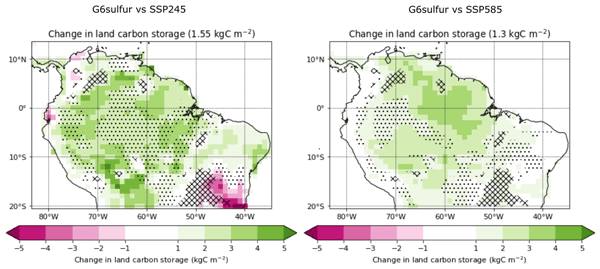
Contrary to some expectations, results from the latest Earth System Models suggest that Solar Radiation Geoengineering could protect the Amazon rainforest from climate-driven dieback. Under Stratospheric Aerosol Injection, carbon storage in Amazonia was projected to increase by a mean of 10.8 % relative to a high CO2 emissions scenario, and even by 8.6% compared to a more conventional medium CO2 emissions scenario.
Mathieu Antonopoulos, Jérémie Juvin-Quarroz, and Olivier Boucher
Atmos. Chem. Phys., 26, 4771–4784, https://doi.org/10.5194/acp-26-4771-2026, https://doi.org/10.5194/acp-26-4771-2026, 2026
Short summary
Short summary
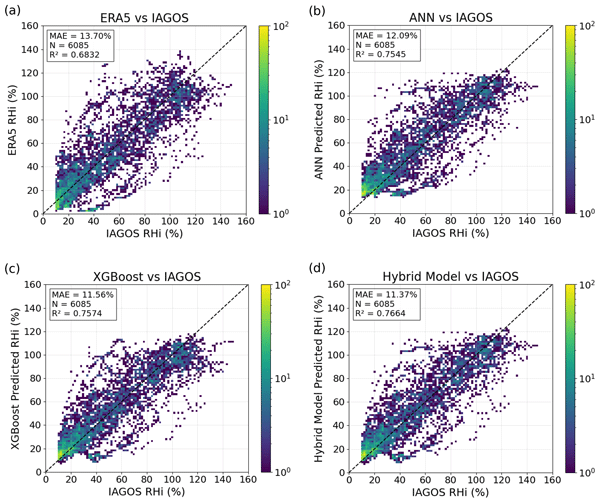
Aviation impacts climate by forming contrails that trap heat and can persist for hours at cruising altitudes. Forecasting these humid regions is difficult, as satellites lack accuracy, aircraft data are limited, and ERA5 reanalysis has random errors. This study presents a hybrid machine learning method that corrects ERA5 with aircraft data, using decision trees in dry air and neural networks in humid air. It improves relative humidity predictions, especially in the lower stratosphere.
Gaurav Dogra, Olivier Boucher, and Nicolas Bellouin
EGUsphere, https://doi.org/10.5194/egusphere-2025-5711, https://doi.org/10.5194/egusphere-2025-5711, 2025
Short summary
Short summary
We study how pollution particles and upward winds affect low level clouds over the ocean. The control of cloud properties by particles and winds is difficult to represent in numerical models. Our model simulates known behaviour, including how cloud droplet number increases with increased particle number and/or stronger upward winds. But clouds behaviour shifts between being limited by particle number or by the strength of the winds, indicating a dynamic interconnection of the two factors.
Julie Carles, Nicolas Bellouin, Najda Villefranque, and Jean-Louis Dufresne
Atmos. Chem. Phys., 25, 13953–13973, https://doi.org/10.5194/acp-25-13953-2025, https://doi.org/10.5194/acp-25-13953-2025, 2025
Short summary
Short summary
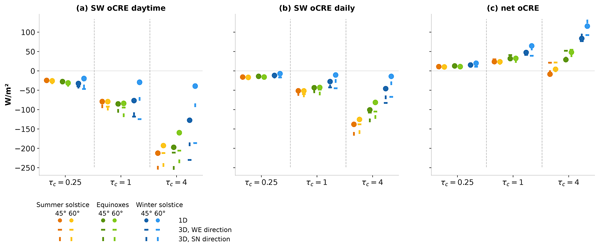
Cirrus and contrails affect Earth’s energy balance with a lot of remaining uncertainty. The balance between solar and terrestrial radiation is delicate to calculate, and factors such as cloud optical depth, shape, and Sun position are crucial to estimate the effect of those clouds on radiation. Also, often neglected three-dimensional paths of radiation, or 3D effects, may be important to account for at the climatic scale.
John P. Dunne, Helene T. Hewitt, Julie M. Arblaster, Frédéric Bonou, Olivier Boucher, Tereza Cavazos, Beth Dingley, Paul J. Durack, Birgit Hassler, Martin Juckes, Tomoki Miyakawa, Matt Mizielinski, Vaishali Naik, Zebedee Nicholls, Eleanor O'Rourke, Robert Pincus, Benjamin M. Sanderson, Isla R. Simpson, and Karl E. Taylor
Geosci. Model Dev., 18, 6671–6700, https://doi.org/10.5194/gmd-18-6671-2025, https://doi.org/10.5194/gmd-18-6671-2025, 2025
Short summary
Short summary
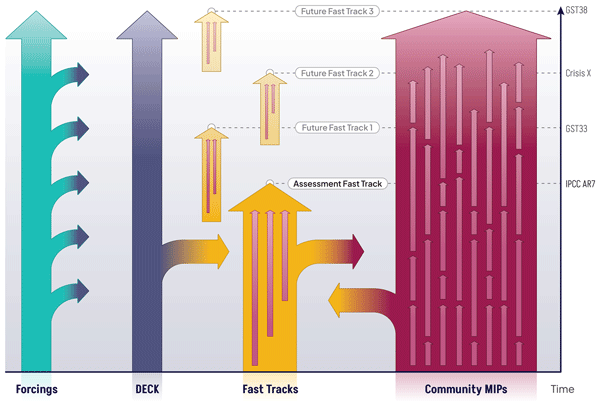
The seventh phase of the Coupled Model Intercomparison Project (CMIP7) coordinates efforts to answer key and timely climate science questions and facilitate delivery of relevant multi-model simulations for prediction and projection; characterization, attribution, and process understanding; and vulnerability, impact, and adaptation analysis. Key to the CMIP7 design are the mandatory Diagnostic, Evaluation and Characterization of Klima and optional Assessment Fast Track experiments.
Yann Cohen, Didier Hauglustaine, Nicolas Bellouin, Marianne Tronstad Lund, Sigrun Matthes, Agnieszka Skowron, Robin Thor, Ulrich Bundke, Andreas Petzold, Susanne Rohs, Valérie Thouret, Andreas Zahn, and Helmut Ziereis
Atmos. Chem. Phys., 25, 5793–5836, https://doi.org/10.5194/acp-25-5793-2025, https://doi.org/10.5194/acp-25-5793-2025, 2025
Short summary
Short summary
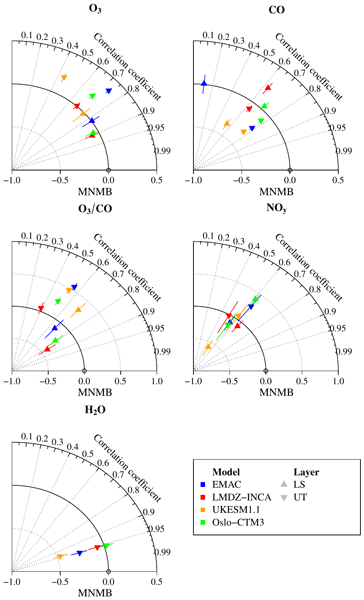
The chemical composition of the atmosphere near the tropopause is a key parameter for evaluating the climate impact of subsonic aviation pollutants. This study uses in situ data collected aboard passenger aircraft to assess the ability of four chemistry–climate models to reproduce (bi-)decadal climatologies of ozone, carbon monoxide, water vapour, and reactive nitrogen in this region. The models reproduce the very distinct ozone seasonality in the upper troposphere and in the lower stratosphere well.
Sauvik Santra, Shubha Verma, Shubham Patel, Olivier Boucher, and Mathew Koll Roxy
EGUsphere, https://doi.org/10.5194/egusphere-2025-2302, https://doi.org/10.5194/egusphere-2025-2302, 2025
Preprint archived
Short summary
Short summary
Uneven spatial changes in Indian monsoon rainfall are linked to tiny airborne particles called aerosols, both human-made and natural (like dust). Using a high-resolution climate model, we show how persistent weakening and strengthening patterns in rainfall are driven by spatially varying aerosols. Reducing human-made aerosols may ease rainfall shortages in some areas but worsen excesses in others. These insights are key for better water management and policy planning.
Irina Melnikova, Philippe Ciais, Katsumasa Tanaka, Hideo Shiogama, Kaoru Tachiiri, Tokuta Yokohata, and Olivier Boucher
Earth Syst. Dynam., 16, 257–273, https://doi.org/10.5194/esd-16-257-2025, https://doi.org/10.5194/esd-16-257-2025, 2025
Short summary
Short summary
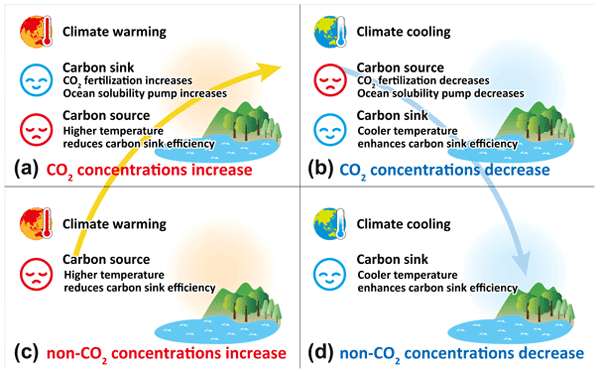
Reducing non-CO2 greenhouse gases is important alongside CO2 for climate mitigation. Here, we look at how reducing their emissions compares to reducing CO2 using an Earth system model. While both types of gases contribute to warming, their regional climate impacts differ. Besides, the carbon cycle responds differently depending on whether climate change is driven by CO2 or non-CO2 gases. Considering both types of gases is important for carbon cycle analysis and climate mitigation strategies.
Kevin Wolf, Nicolas Bellouin, Olivier Boucher, Susanne Rohs, and Yun Li
Atmos. Chem. Phys., 25, 157–181, https://doi.org/10.5194/acp-25-157-2025, https://doi.org/10.5194/acp-25-157-2025, 2025
Short summary
Short summary
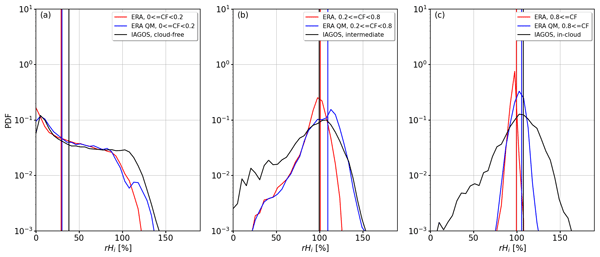
ERA5 atmospheric reanalysis and airborne in situ observations from IAGOS are compared in terms of the representation of the contrail formation potential and the presence of supersaturation. Differences are traced back to biases in ERA5 relative humidity fields. Those biases are addressed by applying a quantile mapping technique that significantly improved contrail estimation based on post-processed ERA5 data.

Audran Borella, Olivier Boucher, Keith P. Shine, Marc Stettler, Katsumasa Tanaka, Roger Teoh, and Nicolas Bellouin
Atmos. Chem. Phys., 24, 9401–9417, https://doi.org/10.5194/acp-24-9401-2024, https://doi.org/10.5194/acp-24-9401-2024, 2024
Short summary
Short summary
This work studies how to compare the climate impact of the CO2 emitted and contrails formed by a flight. This is applied to contrail avoidance strategies that would decrease climate impact of flights by changing the trajectory of aircraft to avoid persistent contrail formation, at the risk of increasing CO2 emissions. We find that different comparison methods lead to different quantification of the total climate impact of a flight but lead to similar decisions of whether to reroute an aircraft.
Malte Meinshausen, Carl-Friedrich Schleussner, Kathleen Beyer, Greg Bodeker, Olivier Boucher, Josep G. Canadell, John S. Daniel, Aïda Diongue-Niang, Fatima Driouech, Erich Fischer, Piers Forster, Michael Grose, Gerrit Hansen, Zeke Hausfather, Tatiana Ilyina, Jarmo S. Kikstra, Joyce Kimutai, Andrew D. King, June-Yi Lee, Chris Lennard, Tabea Lissner, Alexander Nauels, Glen P. Peters, Anna Pirani, Gian-Kasper Plattner, Hans Pörtner, Joeri Rogelj, Maisa Rojas, Joyashree Roy, Bjørn H. Samset, Benjamin M. Sanderson, Roland Séférian, Sonia Seneviratne, Christopher J. Smith, Sophie Szopa, Adelle Thomas, Diana Urge-Vorsatz, Guus J. M. Velders, Tokuta Yokohata, Tilo Ziehn, and Zebedee Nicholls
Geosci. Model Dev., 17, 4533–4559, https://doi.org/10.5194/gmd-17-4533-2024, https://doi.org/10.5194/gmd-17-4533-2024, 2024
Short summary
Short summary
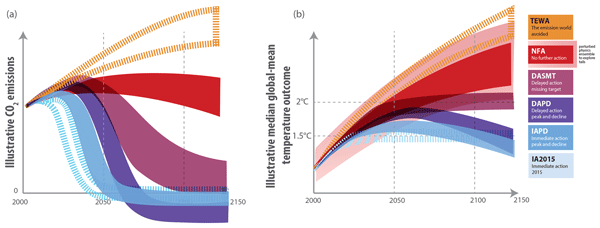
The scientific community is considering new scenarios to succeed RCPs and SSPs for the next generation of Earth system model runs to project future climate change. To contribute to that effort, we reflect on relevant policy and scientific research questions and suggest categories for representative emission pathways. These categories are tailored to the Paris Agreement long-term temperature goal, high-risk outcomes in the absence of further climate policy and worlds “that could have been”.
Sidiki Sanogo, Olivier Boucher, Nicolas Bellouin, Audran Borella, Kevin Wolf, and Susanne Rohs
Atmos. Chem. Phys., 24, 5495–5511, https://doi.org/10.5194/acp-24-5495-2024, https://doi.org/10.5194/acp-24-5495-2024, 2024
Short summary
Short summary
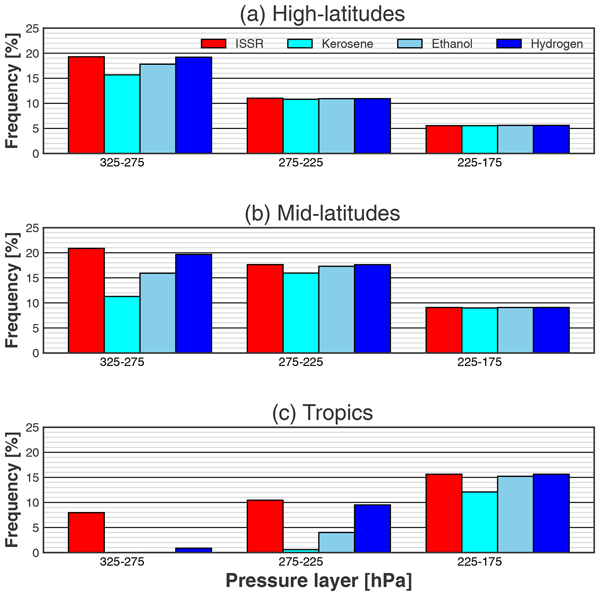
Relative humidity relative to ice (RHi) is a key variable in the formation of cirrus clouds and contrails. This study shows that the properties of the probability density function of RHi differ between the tropics and higher latitudes. In line with RHi and temperature variability, aircraft are likely to produce more contrails with bioethanol and liquid hydrogen as fuel. The impact of this fuel change decreases with decreasing pressure levels but increases from high latitudes to the tropics.
Kevin Wolf, Nicolas Bellouin, and Olivier Boucher
Atmos. Chem. Phys., 24, 5009–5024, https://doi.org/10.5194/acp-24-5009-2024, https://doi.org/10.5194/acp-24-5009-2024, 2024
Short summary
Short summary
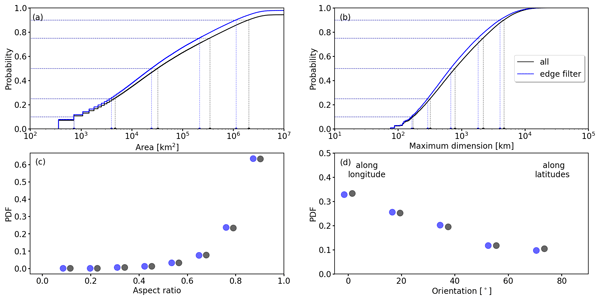
The contrail formation potential and its tempo-spatial distribution are estimated for the North Atlantic flight corridor. Meteorological conditions of temperature and relative humidity are taken from the ERA5 re-analysis and IAGOS. Based on IAGOS flight tracks, crossing length, size, orientation, frequency of occurrence, and overlap of persistent contrail formation areas are determined. The presented conclusions might provide a guide for statistical flight track optimization to reduce contrails.
Daniele Visioni, Alan Robock, Jim Haywood, Matthew Henry, Simone Tilmes, Douglas G. MacMartin, Ben Kravitz, Sarah J. Doherty, John Moore, Chris Lennard, Shingo Watanabe, Helene Muri, Ulrike Niemeier, Olivier Boucher, Abu Syed, Temitope S. Egbebiyi, Roland Séférian, and Ilaria Quaglia
Geosci. Model Dev., 17, 2583–2596, https://doi.org/10.5194/gmd-17-2583-2024, https://doi.org/10.5194/gmd-17-2583-2024, 2024
Short summary
Short summary
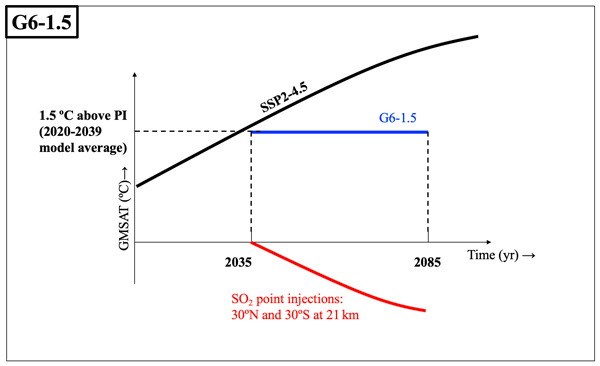
This paper describes a new experimental protocol for the Geoengineering Model Intercomparison Project (GeoMIP). In it, we describe the details of a new simulation of sunlight reflection using the stratospheric aerosols that climate models are supposed to run, and we explain the reasons behind each choice we made when defining the protocol.
Ella Gilbert, Jhaswantsing Purseed, Yun Li, Martina Krämer, Beatrice Altamura, and Nicolas Bellouin
EGUsphere, https://doi.org/10.5194/egusphere-2024-821, https://doi.org/10.5194/egusphere-2024-821, 2024
Preprint withdrawn
Short summary
Short summary
We use a simple experiment to explore the non-CO2 impacts of aviation on climate, which are considerably larger than the impact of the sector’s carbon emissions alone. We show that the main effect of our experiments – which intend to mimic the effect of aircraft soot emissions reaching existing high-altitude cirrus clouds – is to extend cloud lifetime, thereby enhancing their effect on climate.
Kevin Wolf, Nicolas Bellouin, and Olivier Boucher
Atmos. Chem. Phys., 23, 14003–14037, https://doi.org/10.5194/acp-23-14003-2023, https://doi.org/10.5194/acp-23-14003-2023, 2023
Short summary
Short summary
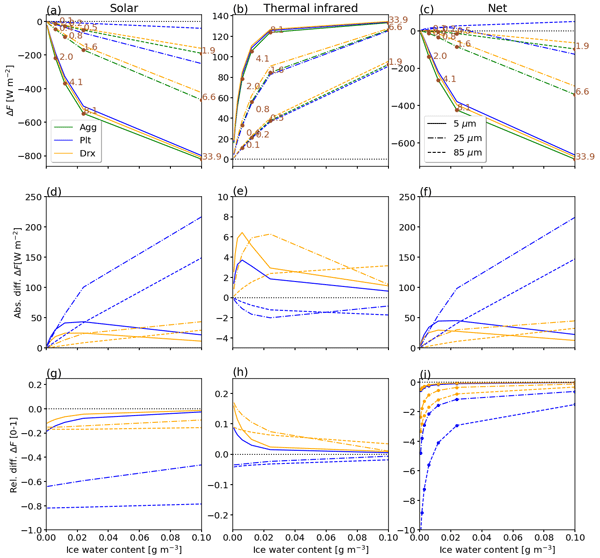
Cirrus and contrails considerably impact Earth's energy budget. Such ice clouds can have a positive (warming) or negative (cooling) net radiative effect (RE), which depends on cloud and ambient properties. The effect of eight parameters on the cloud RE is estimated. In total, 283 500 radiative transfer simulations have been performed, spanning the typical parameter ranges associated with cirrus and contrails. Specific cases are selected and discussed. The data set is publicly available.
Jan Polcher, Anthony Schrapffer, Eliott Dupont, Lucia Rinchiuso, Xudong Zhou, Olivier Boucher, Emmanuel Mouche, Catherine Ottlé, and Jérôme Servonnat
Geosci. Model Dev., 16, 2583–2606, https://doi.org/10.5194/gmd-16-2583-2023, https://doi.org/10.5194/gmd-16-2583-2023, 2023
Short summary
Short summary
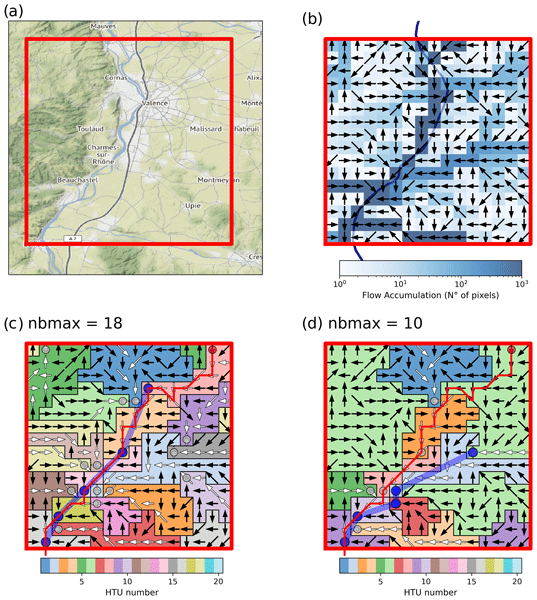
The proposed graphs of hydrological sub-grid elements for atmospheric models allow us to integrate the topographical elements needed in land surface models for a realistic representation of horizontal water and energy transport. The study demonstrates the numerical properties of the automatically built graphs and the simulated water flows.
Daniele Visioni, Ben Kravitz, Alan Robock, Simone Tilmes, Jim Haywood, Olivier Boucher, Mark Lawrence, Peter Irvine, Ulrike Niemeier, Lili Xia, Gabriel Chiodo, Chris Lennard, Shingo Watanabe, John C. Moore, and Helene Muri
Atmos. Chem. Phys., 23, 5149–5176, https://doi.org/10.5194/acp-23-5149-2023, https://doi.org/10.5194/acp-23-5149-2023, 2023
Short summary
Short summary
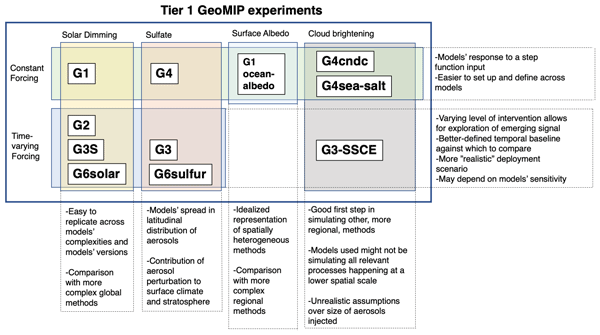
Geoengineering indicates methods aiming to reduce the temperature of the planet by means of reflecting back a part of the incoming radiation before it reaches the surface or allowing more of the planetary radiation to escape into space. It aims to produce modelling experiments that are easy to reproduce and compare with different climate models, in order to understand the potential impacts of these techniques. Here we assess its past successes and failures and talk about its future.
Yann Quilcaille, Thomas Gasser, Philippe Ciais, and Olivier Boucher
Geosci. Model Dev., 16, 1129–1161, https://doi.org/10.5194/gmd-16-1129-2023, https://doi.org/10.5194/gmd-16-1129-2023, 2023
Short summary
Short summary
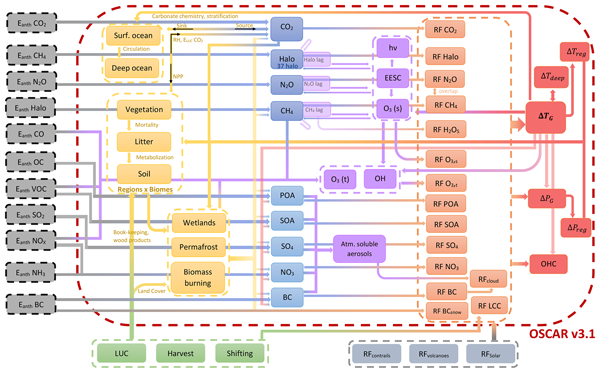
The model OSCAR is a simple climate model, meaning its representation of the Earth system is simplified but calibrated on models of higher complexity. Here, we diagnose its latest version using a total of 99 experiments in a probabilistic framework and under observational constraints. OSCAR v3.1 shows good agreement with observations, complex Earth system models and emerging properties. Some points for improvements are identified, such as the ocean carbon cycle.
Yangxin Chen, Duoying Ji, Qian Zhang, John C. Moore, Olivier Boucher, Andy Jones, Thibaut Lurton, Michael J. Mills, Ulrike Niemeier, Roland Séférian, and Simone Tilmes
Earth Syst. Dynam., 14, 55–79, https://doi.org/10.5194/esd-14-55-2023, https://doi.org/10.5194/esd-14-55-2023, 2023
Short summary
Short summary
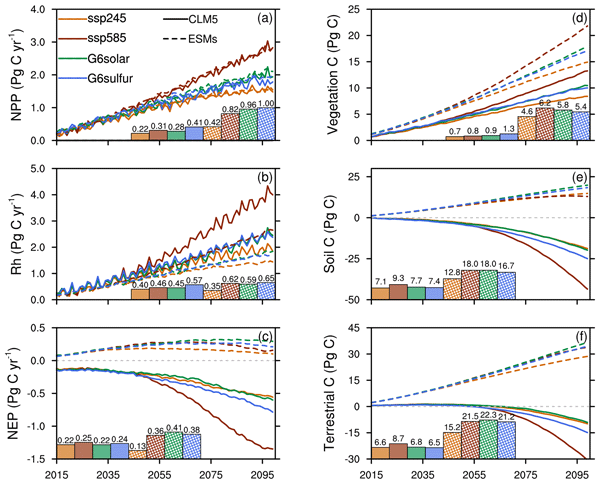
Solar geoengineering has been proposed as a way of counteracting the warming effects of increasing greenhouse gases by reflecting solar radiation. This work shows that solar geoengineering can slow down the northern-high-latitude permafrost degradation but cannot preserve the permafrost ecosystem as that under a climate of the same warming level without solar geoengineering.
Kevin Wolf, Nicolas Bellouin, and Olivier Boucher
Atmos. Chem. Phys., 23, 287–309, https://doi.org/10.5194/acp-23-287-2023, https://doi.org/10.5194/acp-23-287-2023, 2023
Short summary
Short summary
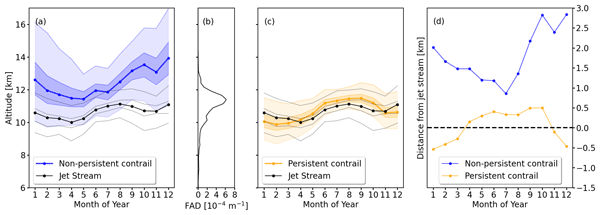
Recent studies estimate the radiative impact of contrails to be similar to or larger than that of emitted CO2; thus, contrail mitigation might be an opportunity to reduce the climate effects of aviation. A radiosonde data set is analyzed in terms of the vertical distribution of potential contrails, contrail mitigation by flight altitude changes, and linkages with the tropopause and jet stream. The effect of prospective jet engine developments and alternative fuels are estimated.
Johannes Quaas, Hailing Jia, Chris Smith, Anna Lea Albright, Wenche Aas, Nicolas Bellouin, Olivier Boucher, Marie Doutriaux-Boucher, Piers M. Forster, Daniel Grosvenor, Stuart Jenkins, Zbigniew Klimont, Norman G. Loeb, Xiaoyan Ma, Vaishali Naik, Fabien Paulot, Philip Stier, Martin Wild, Gunnar Myhre, and Michael Schulz
Atmos. Chem. Phys., 22, 12221–12239, https://doi.org/10.5194/acp-22-12221-2022, https://doi.org/10.5194/acp-22-12221-2022, 2022
Short summary
Short summary
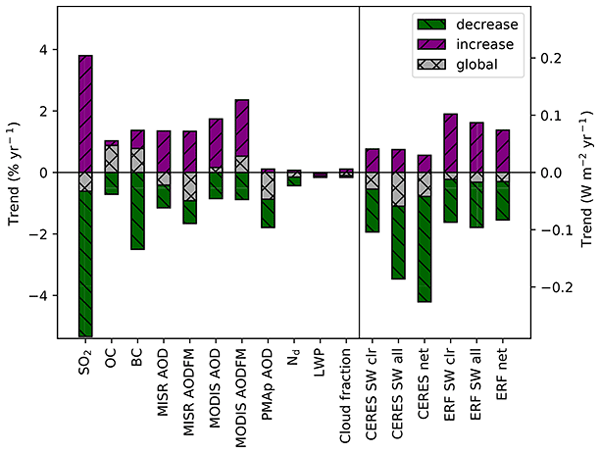
Pollution particles cool climate and offset part of the global warming. However, they are washed out by rain and thus their effect responds quickly to changes in emissions. We show multiple datasets to demonstrate that aerosol emissions and their concentrations declined in many regions influenced by human emissions, as did the effects on clouds. Consequently, the cooling impact on the Earth energy budget became smaller. This change in trend implies a relative warming.

Sébastien Gardoll and Olivier Boucher
Geosci. Model Dev., 15, 7051–7073, https://doi.org/10.5194/gmd-15-7051-2022, https://doi.org/10.5194/gmd-15-7051-2022, 2022
Short summary
Short summary
Tropical cyclones (TCs) are one of the most devastating natural disasters, which justifies monitoring and prediction in the context of a changing climate. In this study, we have adapted and tested a convolutional neural network (CNN) for the classification of reanalysis outputs (ERA5 and MERRA-2 labeled by HURDAT2) according to the presence or absence of TCs. We tested the impact of interpolation and of "mixing and matching" the training and test sets on the performance of the CNN.
Irina Melnikova, Olivier Boucher, Patricia Cadule, Katsumasa Tanaka, Thomas Gasser, Tomohiro Hajima, Yann Quilcaille, Hideo Shiogama, Roland Séférian, Kaoru Tachiiri, Nicolas Vuichard, Tokuta Yokohata, and Philippe Ciais
Earth Syst. Dynam., 13, 779–794, https://doi.org/10.5194/esd-13-779-2022, https://doi.org/10.5194/esd-13-779-2022, 2022
Short summary
Short summary
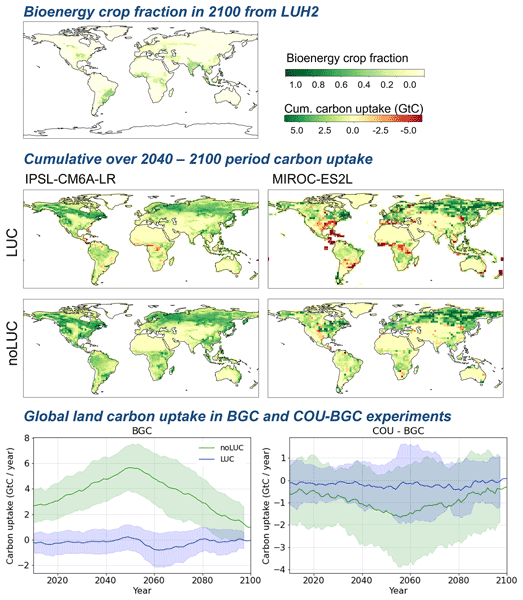
The deployment of bioenergy crops for capturing carbon from the atmosphere facilitates global warming mitigation via generating negative CO2 emissions. Here, we explored the consequences of large-scale energy crops deployment on the land carbon cycle. The land-use change for energy crops leads to carbon emissions and loss of future potential increase in carbon uptake by natural ecosystems. This impact should be taken into account by the modeling teams and accounted for in mitigation policies.
Simone Tilmes, Daniele Visioni, Andy Jones, James Haywood, Roland Séférian, Pierre Nabat, Olivier Boucher, Ewa Monica Bednarz, and Ulrike Niemeier
Atmos. Chem. Phys., 22, 4557–4579, https://doi.org/10.5194/acp-22-4557-2022, https://doi.org/10.5194/acp-22-4557-2022, 2022
Short summary
Short summary
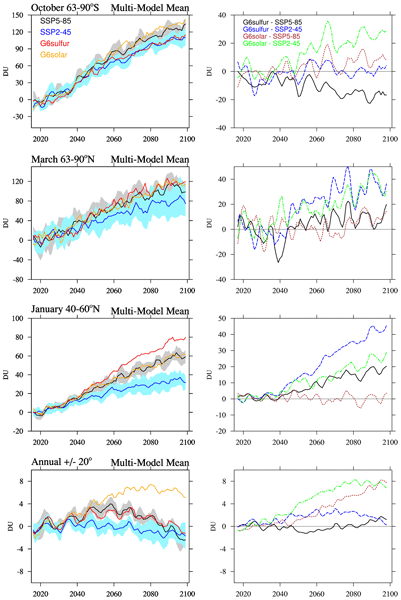
This study assesses the impacts of climate interventions, using stratospheric sulfate aerosol and solar dimming on stratospheric ozone, based on three Earth system models with interactive stratospheric chemistry. The climate interventions have been applied to a high emission (baseline) scenario in order to reach global surface temperatures of a medium emission scenario. We find significant increases and decreases in total column ozone, depending on regions and seasons.
Andy Jones, Jim M. Haywood, Adam A. Scaife, Olivier Boucher, Matthew Henry, Ben Kravitz, Thibaut Lurton, Pierre Nabat, Ulrike Niemeier, Roland Séférian, Simone Tilmes, and Daniele Visioni
Atmos. Chem. Phys., 22, 2999–3016, https://doi.org/10.5194/acp-22-2999-2022, https://doi.org/10.5194/acp-22-2999-2022, 2022
Short summary
Short summary
Simulations by six Earth-system models of geoengineering by introducing sulfuric acid aerosols into the tropical stratosphere are compared. A robust impact on the northern wintertime North Atlantic Oscillation is found, exacerbating precipitation reduction over parts of southern Europe. In contrast, the models show no consistency with regard to impacts on the Quasi-Biennial Oscillation, although results do indicate a risk that the oscillation could become locked into a permanent westerly phase.
Cited articles
Akhtar Martínez, C. and Jarrett, J.: Comparing two contrail models under certain and uncertain inputs, in: AIAA SCITECH 2024 Forum, AIAA SciTech Forum, American Institute of Aeronautics and Astronautics, https://doi.org/10.2514/6.2024-1023, 2024. a
Akhtar Martínez, C., Eastham, S. D., and Jarrett, J. P.: Zero-dimensional contrail models could underpredict lifetime optical depth, Atmos. Chem. Phys., 25, 12875–12891, https://doi.org/10.5194/acp-25-12875-2025, 2025. a, b
Bickel, M., Ponater, M., Burkhardt, U., Righi, M., Hendricks, J., and Jöckel, P.: Contrail cirrus climate impact: From radiative forcing to surface temperature change, J. Climate, 38, 1895–1912, https://doi.org/10.1175/JCLI-D-24-0245.1, 2025. a, b, c, d
Borella, A.: Dataset supporting ”Concept of risk-aware contrail avoidance strategies” by Borella et al., Zenodo [data set], https://doi.org/10.5281/zenodo.20171762, 2026. a
Borella, A., Boucher, O., Shine, K. P., Stettler, M., Tanaka, K., Teoh, R., and Bellouin, N.: The importance of an informed choice of CO2-equivalence metrics for contrail avoidance, Atmos. Chem. Phys., 24, 9401–9417, https://doi.org/10.5194/acp-24-9401-2024, 2024. a, b, c, d
Boucher, O., Bellouin, N., Clark, H., Gryspeerdt, E., and Karadayi, J.: Comparison of actual and time-optimized flight trajectories in the context of the In-service Aircraft for a Global Observing System (IAGOS) programme, Aerospace, 10, 744, https://doi.org/10.3390/aerospace10090744, 2023. a
Boulanger, D., Blot, R., Bundke, U., Gerbig, C., Hermann, M., Nédélec, P., Rohs, S., and Ziereis, H.: IAGOS final quality controlled Observational Data L2 – Time series, Aeris [data set], https://doi.org/10.25326/06, 2018. a, b
Brasseur, G. P., Gupta, M., Anderson, B. E., Balasubramanian, S., Barrett, S., Duda, D., Fleming, G., Forster, P. M., Fuglestvedt, J., Gettelman, A., Halthore, R. N., Jacob, S. D., Jacobson, M. Z., Khodayari, A., Liou, K.-N., Lund, M. T., Miake-Lye, R. C., Minnis, P., Olsen, S., Penner, J. E., Prinn, R., Schumann, U., Selkirk, H. B., Sokolov, A., Unger, N., Wolfe, P., Wong, H.-W., Wuebbles, D. W., Yi, B., Yang, P., and Zhou, C.: Impact of aviation on climate: FAA’s Aviation Climate Change Research Initiative (ACCRI) Phase II, B. Am. Meteorol. Soc., 97, 561–583, https://doi.org/10.1175/BAMS-D-13-00089.1, 2016. a
Bröcker, J. and Ben Bouallègue, Z.: Stratified rank histograms for ensemble forecast verification under serial dependence, Q. J. Roy. Meteorol. Soc., 146, 1976–1990, https://doi.org/10.1002/qj.3778, 2020. a, b
Burkhardt, U. and Kärcher, B.: Global radiative forcing from contrail cirrus, Nat. Clim. Change, 1, 54–58, https://doi.org/10.1038/nclimate1068, 2011. a
Burkhardt, U., Bock, L., and Bier, A.: Mitigating the contrail cirrus climate impact by reducing aircraft soot number emissions, npj Clim. Atmos. Sci., 1, 1–7, https://doi.org/10.1038/s41612-018-0046-4, 2018. a
Castino, F., Yin, F., Grewe, V., Yamashita, H., Matthes, S., Dietmüller, S., Baumann, S., Soler, M., Simorgh, A., Mendiguchia Meuser, M., Linke, F., and Lührs, B.: Decision-making strategies implemented in SolFinder 1.0 to identify eco-efficient aircraft trajectories: application study in AirTraf 3.0, Geosci. Model Dev., 17, 4031–4052, https://doi.org/10.5194/gmd-17-4031-2024, 2024. a
Dean, T. R., Abbott, T. H., Engberg, Z., Masson, N., Teoh, R., Itcovitz, J. P., Stettler, M. E. J., and Shapiro, M. L.: Impact of forecast stability on navigational contrail avoidance, Environ. Res.: Infrastruct. Sustain., 5, 045008, https://doi.org/10.1088/2634-4505/ae1da5, 2025. a, b
DuBois, D. and Paynter, G. C.: “Fuel Flow Method 2” for estimating aircraft emissions, SAE T., 115, 1–14, https://doi.org/10.4271/2006-01-1987, 2006. a
EASA: Updated analysis of the non-CO2 climate impacts of aviation and potential policy measures pursuant to the EU Emissions Trading System Directive Article 30(4), European Union Aviation Safety Agency, 192 pp., https://www.easa.europa.eu/en/document-library/research-reports/report-commission-european-parliament-and-council (last access: 17 October 2023), 2020. a, b
ECMWF: IFS Documentation CY49R1 – Part V: Ensemble Prediction System, in: IFS Documentation CY49R1, ECMWF, https://doi.org/10.21957/956d60ad81, 2024a. a, b
ECMWF: IFS Documentation CY49R1 – Part IV: Physical Processes, in: IFS Documentation CY49R1, ECMWF, https://doi.org/10.21957/c731ee1102, 2024b. a
Engberg, Z., Teoh, R., Abbott, T., Dean, T., Stettler, M. E. J., and Shapiro, M. L.: Forecasting contrail climate forcing for flight planning and air traffic management applications: the CocipGrid model in pycontrails 0.51.0, Geosci. Model Dev., 18, 253–286, https://doi.org/10.5194/gmd-18-253-2025, 2025. a, b
EUROCONTROL: User manual for the Base of Aircraft Data (BADA) Revision 3.15. EEC Technical/Scientific Report No. 19/03/18-45, EUROCONTROL Experimental Centre (EEC), https://www.eurocontrol.int/model/bada (last access: 26 August 2025), 2019. a
European Commission: Commission Implementing Regulation (EU) 2024/2493 of 23 September 2024 amending Implementing Regulation (EU) 2018/2066 as regards updating the monitoring and reporting of greenhouse gas emissions pursuant to Directive 2003/87/EC of the European Parliament and of the Council, http://data.europa.eu/eli/reg_impl/2024/2493/oj (last access: 25 April 2026), 2024. a
Forster, C., Stohl, A., James, P., and Thouret, V.: The residence times of aircraft emissions in the stratosphere using a mean emission inventory and emissions along actual flight tracks, J. Geophys. Res.-Atmos., 108, https://doi.org/10.1029/2002JD002515, 2003. a
Fritz, T. M., Eastham, S. D., Speth, R. L., and Barrett, S. R. H.: The role of plume-scale processes in long-term impacts of aircraft emissions, Atmos. Chem. Phys., 20, 5697–5727, https://doi.org/10.5194/acp-20-5697-2020, 2020. a, b
Frömming, C., Grewe, V., Brinkop, S., Jöckel, P., Haslerud, A. S., Rosanka, S., van Manen, J., and Matthes, S.: Influence of weather situation on non-CO2 aviation climate effects: the REACT4C climate change functions, Atmos. Chem. Phys., 21, 9151–9172, https://doi.org/10.5194/acp-21-9151-2021, 2021. a
Gasser, T., Ciais, P., Boucher, O., Quilcaille, Y., Tortora, M., Bopp, L., and Hauglustaine, D.: The compact Earth system model OSCAR v2.2: description and first results, Geosci. Model Dev., 10, 271–319, https://doi.org/10.5194/gmd-10-271-2017, 2017. a
Gierens, K., Spichtinger, P., and Schumann, U.: Ice supersaturation, in: Atmospheric Physics: Background – Methods – Trends, edited by: Schumann, U., Research Topics in Aerospace, pp. 135–150, Springer, Berlin, Heidelberg, ISBN 978-3-642-30183-4, https://doi.org/10.1007/978-3-642-30183-4_9, 2012. a
Gierens, K., Matthes, S., and Rohs, S.: How well can persistent contrails be predicted?, Aerospace, 7, 169, https://doi.org/10.3390/aerospace7120169, 2020. a, b
Grewe, V. and Stenke, A.: AirClim: an efficient tool for climate evaluation of aircraft technology, Atmos. Chem. Phys., 8, 4621–4639, https://doi.org/10.5194/acp-8-4621-2008, 2008. a
Grewe, V., Frömming, C., Matthes, S., Brinkop, S., Ponater, M., Dietmüller, S., Jöckel, P., Garny, H., Tsati, E., Dahlmann, K., Søvde, O. A., Fuglestvedt, J., Berntsen, T. K., Shine, K. P., Irvine, E. A., Champougny, T., and Hullah, P.: Aircraft routing with minimal climate impact: the REACT4C climate cost function modelling approach (V1.0), Geosci. Model Dev., 7, 175–201, https://doi.org/10.5194/gmd-7-175-2014, 2014. a
Grewe, V., Matthes, S., Frömming, C., Brinkop, S., Jöckel, P., Gierens, K., Champougny, T., Fuglestvedt, J., Haslerud, A., Irvine, E., and Shine, K.: Feasibility of climate-optimized air traffic routing for trans-Atlantic flights, Environ. Res. Lett., 12, 034003, https://doi.org/10.1088/1748-9326/aa5ba0, 2017. a, b
Hanst, M., Köhler, C. G., Seifert, A., and Schlemmer, L.: Predicting ice supersaturation for contrail avoidance: ensemble forecasting using ICON with two-moment ice microphysics, Atmos. Chem. Phys., 25, 17253–17274, https://doi.org/10.5194/acp-25-17253-2025, 2025. a
Hildebrandt, K. G., Castino, F., Meijer, V., and Yin, F.: Variability of ice supersaturated regions at flight altitudes: evaluation of ERA5 reanalysis using IAGOS in situ measurements, Atmos. Chem. Phys., 26, 6449–6470, https://doi.org/10.5194/acp-26-6449-2026, 2026. a
Hofer, S., Gierens, K., and Rohs, S.: How well can persistent contrails be predicted? An update, Atmos. Chem. Phys., 24, 7911–7925, https://doi.org/10.5194/acp-24-7911-2024, 2024. a, b, c
ICCT: CO2 emissions from commercial aviation 2018, by: Graver, B., Zhang, K., and Rutherford, D., International Council on Clean Transportation, https://theicct.org/wp-content/uploads/2021/06/ICCT_CO2-commercl-aviation-2018_20190918.pdf (last access: 17 October 2023), 2018. a
Irvine, E. A., Hoskins, B. J., and Shine, K. P.: A simple framework for assessing the trade-off between the climate impact of aviation carbon dioxide emissions and contrails for a single flight, Environ. Res. Lett., 9, 064021, https://doi.org/10.1088/1748-9326/9/6/064021, 2014. a
Jafarimoghaddam, A. and Soler, M.: A multi-physics Eulerian framework for long-term contrail evolution, EGUsphere [preprint], https://doi.org/10.5194/egusphere-2025-4155, 2025. a
Jaramillo, P., Kahn Ribeiro, S., Newman, P., Dhar, S., Diemuodeke, O. E., Kajino, T., Lee, D. S., Nugroho, S., Ou, X., Hammer Strømman, A., and Whitehead, J.: Transport, in: Climate Change 2022: Mitigation of Climate Change. Contribution of Working Group III to the Sixth Assessment Report of the Intergovernmental Panel on Climate Change, edited by: Shukla, P. R., Skea, J., Slade, R., Al Khourdajie, A., van Diemen, R., McCollum, D., Pathak, M., Some, S., Vyas, P., Fradera, R., Belkacemi, M., Hasija, A., Lisboa, G., Luz, S., and Malley, J., pp. 1049–1160, Cambridge University Press, Cambridge, United Kingdom and New York, NY, USA, ISBN 978-1-009-15792-6, https://doi.org/10.1017/9781009157926.012, 2023. a
Johansson, D. J. A., Azar, C., Pettersson, S., Sterner, T., Stettler, M. E. J., and Teoh, R.: The social costs of aviation CO2 and contrail cirrus, Nat. Commun., 16, 8558, https://doi.org/10.1038/s41467-025-64355-5, 2025. a
Klöwer, M., Allen, M. R., Lee, D. S., Proud, S. R., Gallagher, L., and Skowron, A.: Quantifying aviation's contribution to global warming, Environ. Res. Lett., 16, 104027, https://doi.org/10.1088/1748-9326/ac286e, 2021. a
Kärcher, B.: Formation and radiative forcing of contrail cirrus, Nat. Commun., 9, 1824, https://doi.org/10.1038/s41467-018-04068-0, 2018. a, b
Köhler, M. O., Rädel, G., Shine, K. P., Rogers, H. L., and Pyle, J. A.: Latitudinal variation of the effect of aviation NOx emissions on atmospheric ozone and methane and related climate metrics, Atmos. Environ., 64, 1–9, https://doi.org/10.1016/j.atmosenv.2012.09.013, 2013. a
Lee, D., Fahey, D., Skowron, A., Allen, M., Burkhardt, U., Chen, Q., Doherty, S., Freeman, S., Forster, P., Fuglestvedt, J., Gettelman, A., De León, R., Lim, L., Lund, M., Millar, R., Owen, B., Penner, J., Pitari, G., Prather, M., Sausen, R., and Wilcox, L.: The contribution of global aviation to anthropogenic climate forcing for 2000 to 2018, Atmos. Environ., 244, 117834, https://doi.org/10.1016/j.atmosenv.2020.117834, 2021. a, b, c
Lee, D. S., R. Allen, M., Cumpsty, N., Owen, B., P. Shine, K., and Skowron, A.: Uncertainties in mitigating aviation non-CO2 emissions for climate and air quality using hydrocarbon fuels, Environ. Sci.: Atmos., https://doi.org/10.1039/D3EA00091E, 2023. a
Mannstein, H., Spichtinger, P., and Gierens, K.: A note on how to avoid contrail cirrus, Transport. Res. D – Tr. E., 10, 421–426, https://doi.org/10.1016/j.trd.2005.04.012, 2005. a
Martín Frías, A., Shapiro, M. L., Engberg, Z., Zopp, R., Soler, M., and Stettler, M. E. J.: Feasibility of contrail avoidance in a commercial flight planning system: an operational analysis, Environ. Res.-Infrastruct. Sustain., 4, 015013, https://doi.org/10.1088/2634-4505/ad310c, 2024. a, b, c, d, e, f
Matthes, S., Lührs, B., Dahlmann, K., Grewe, V., Linke, F., Yin, F., Klingaman, E., and Shine, K. P.: Climate-optimized trajectories and robust mitigation potential: Flying ATM4E, Aerospace, 7, 156, https://doi.org/10.3390/aerospace7110156, 2020. a
Megill, L., Deck, K., and Grewe, V.: Alternative climate metrics to the Global Warming Potential are more suitable for assessing aviation non-CO2 effects, Commun. Earth Environ., 5, 1–9, https://doi.org/10.1038/s43247-024-01423-6, 2024. a
Molloy, J., Teoh, R., Harty, S., Koudis, G., Schumann, U., Poll, I., and Stettler, M. E. J.: Design principles for a contrail-minimizing trial in the North Atlantic, Aerospace, 9, 375, https://doi.org/10.3390/aerospace9070375, 2022. a
Niklaß, M., Linke, F., Dahlmann, K., Grewe, V., Matthes, S., Plohr, M., Maertens, S., Wozny, F., and Scheelhaase, J.: Decision parameters of an MRV scheme for integrating non-CO2 aviation effects into EU ETS, https://www.umweltbundesamt.de/sites/default/files/medien/11850/publikationen/30_2024_cc_decision_parameters.pdf (last access: 26 August 2025), 2024. a, b
Niklaß, M., Lührs, B., Grewe, V., Dahlmann, K., Luchkova, T., Linke, F., and Gollnick, V.: Potential to reduce the climate impact of aviation by climate restricted airspaces, Transp. Policy, 83, 102–110, https://doi.org/10.1016/j.tranpol.2016.12.010, 2019. a
Nuic, A., Poles, D., and Mouillet, V.: BADA: An advanced aircraft performance model for present and future ATM systems, Int. J. Adapt. Control, 24, 850–866, https://doi.org/10.1002/acs.1176, 2010. a
Petzold, A., Thouret, V., Gerbig, C., Zahn, A., Brenninkmeijer, C. A. M., Gallagher, M., Hermann, M., Pontaud, M., Ziereis, H., Boulanger, D., Marshall, J., Nédélec, P., Smit, H. G. J., Friess, U., Flaud, J.-M., Wahner, A., Cammas, J.-P., and Volz-Thomas, A.: Global-scale atmosphere monitoring by in-service aircraft – current achievements and future prospects of the European Research Infrastructure IAGOS, Tellus B, 67, 28452, https://doi.org/10.3402/tellusb.v67.28452, 2015. a
Platt, J. C., Shapiro, M. L., Engberg, Z., McCloskey, K., Geraedts, S., Sankar, T., Stettler, M. E. J., Teoh, R., Schumann, U., Rohs, S., Brand, E., and Arsdale, C. V.: The effect of uncertainty in humidity and model parameters on the prediction of contrail energy forcing, Environ. Res. Commun., 6, 095015, https://doi.org/10.1088/2515-7620/ad6ee5, 2024. a, b, c, d, e
Poles, D., Nuic, A., and Mouillet, V.: Advanced aircraft performance modeling for ATM: Analysis of BADA model capabilities, in: 29th Digital Avionics Systems Conference, pp. 1.D.1-1–1.D.1-14, https://doi.org/10.1109/DASC.2010.5655518, 2010. a
Ponater, M., Marquart, S., Sausen, R., and Schumann, U.: On contrail climate sensitivity, Geophys. Res. Lett., 32, https://doi.org/10.1029/2005GL022580, 2005. a
Ponsonby, J., Teoh, R., Kärcher, B., and Stettler, M. E. J.: An updated microphysical model for particle activation in contrails: the role of volatile plume particles, Atmos. Chem. Phys., 25, 18617–18637, https://doi.org/10.5194/acp-25-18617-2025, 2025. a
Prather, M. J., Gettelman, A., and Penner, J. E.: Trade-offs in aviation impacts on climate favour non-CO2 mitigation, Nature, 643, 988–993, https://doi.org/10.1038/s41586-025-09198-2, 2025. a
Quante, G., Voß, S., Bullerdiek, N., Voigt, C., and Kaltschmitt, M.: Hydroprocessing of fossil fuel-based aviation kerosene – Technology options and climate impact mitigation potentials, Atmos. Environ. X, 22, 100259, https://doi.org/10.1016/j.aeaoa.2024.100259, 2024. a
Rao, P., Yin, F., Grewe, V., Yamashita, H., Jöckel, P., Matthes, S., Mertens, M., and Frömming, C.: Case study for testing the validity of NOx-ozone algorithmic climate change functions for optimising flight trajectories, Aerospace, 9, 231, https://doi.org/10.3390/aerospace9050231, 2022. a
Rap, A., Forster, P. M., Haywood, J. M., Jones, A., and Boucher, O.: Estimating the climate impact of linear contrails using the UK Met Office climate model, Geophys. Res. Lett., 37, https://doi.org/10.1029/2010GL045161, 2010. a
Reutter, P., Neis, P., Rohs, S., and Sauvage, B.: Ice supersaturated regions: properties and validation of ERA-Interim reanalysis with IAGOS in situ water vapour measurements, Atmos. Chem. Phys., 20, 787–804, https://doi.org/10.5194/acp-20-787-2020, 2020. a
Rosenow, J., Fricke, H., Luchkova, T., and Schultz, M.: Minimizing contrail formation by rerouting around dynamic ice-supersaturated regions, Aeronaut. Aerosp. Open Access J., 2, https://doi.org/10.15406/aaoaj.2018.02.00039, 2018. a
Sausen, R., Hofer, S., Gierens, K., Bugliaro, L., Ehrmanntraut, R., Sitova, I., Walczak, K., Burridge-Diesing, A., Bowman, M., and Miller, N.: Can we successfully avoid persistent contrails by small altitude adjustments of flights in the real world?, Meteorol. Z., 33, 83–98, https://doi.org/10.1127/metz/2023/1157, 2024. a, b
Schumann, U.: On conditions for contrail formation from aircraft exhausts, Meteorol. Z., 5, 4–23, https://doi.org/10.1127/metz/5/1996/4, 1996. a, b
Schumann, U.: A contrail cirrus prediction model, Geosci. Model Dev., 5, 543–580, https://doi.org/10.5194/gmd-5-543-2012, 2012. a, b, c, d
Schumann, U., Mayer, B., Graf, K., and Mannstein, H.: A parametric radiative forcing model for contrail cirrus, J. Appl. Meteorol. Climatol., 51, 1391–1406, https://doi.org/10.1175/JAMC-D-11-0242.1, 2012. a, b, c
Shapiro, M., Engberg, Z., Teoh, R., Stettler, M., Dean, T., and Abbott, T.: pycontrails: Python library for modeling aviation climate impacts, Zenodo [code], https://doi.org/10.5281/zenodo.15426480, 2025. a, b
Simorgh, A. and Soler, M.: Climate-optimized flight planning can effectively reduce the environmental footprint of aviation in Europe at low operational costs, Commun. Earth Environ., 6, 1–13, https://doi.org/10.1038/s43247-025-02031-8, 2025. a, b, c
Simorgh, A., Soler, M., González-Arribas, D., Linke, F., Lührs, B., Meuser, M. M., Dietmüller, S., Matthes, S., Yamashita, H., Yin, F., Castino, F., Grewe, V., and Baumann, S.: Robust 4D climate-optimal flight planning in structured airspace using parallelized simulation on GPUs: ROOST V1.0, Geosci. Model Dev., 16, 3723–3748, https://doi.org/10.5194/gmd-16-3723-2023, 2023. a, b
Simorgh, A., Soler, M., Castino, F., Yin, F., and Cerezo-Magaña, M.: Concept of robust climate-friendly flight planning under multiple climate impact estimates, Transport. Res. D – Tr. E., 131, 104215, https://doi.org/10.1016/j.trd.2024.104215, 2024a. a
Simorgh, A., Soler, M., Dietmüller, S., Matthes, S., Yamashita, H., Castino, F., and Yin, F.: Robust 4D climate-optimal aircraft trajectory planning under weather-induced uncertainties: Free-routing airspace, Transport. Res. D – Tr. E., 131, 104196, https://doi.org/10.1016/j.trd.2024.104196, 2024b. a, b, c, d
Smith, J. R., Grobler, C., Hodgson, P. J., Mukhopadhaya, J., Shapiro, M. L., Mirolo, M., Stettler, M. E. J., Eastham, S. D., and Barrett, S. R. H.: The climate opportunities and risks of contrail avoidance, Nat. Commun., 17, 2092, https://doi.org/10.1038/s41467-026-68784-8, 2026. a
Soci, C., Hersbach, H., Simmons, A., Poli, P., Bell, B., Berrisford, P., Horányi, A., Muñoz-Sabater, J., Nicolas, J., Radu, R., Schepers, D., Villaume, S., Haimberger, L., Woollen, J., Buontempo, C., and Thépaut, J.-N.: The ERA5 global reanalysis from 1940 to 2022, Q. J. Roy. Meteorol. Soc., 150, 4014–4048, https://doi.org/10.1002/qj.4803, 2024. a
Sonabend-W, A., Elkin, C., Dean, T., Dudley, J., Ali, N., Blickstein, J., Brand, E., Broshears, B., Chen, S., Engberg, Z., Galyen, M., Geraedts, S., Goyal, N., Grenham, R., Hager, U., Hecker, D., Jany, M., McCloskey, K., Ng, J., Norris, B., Opel, F., Rothenberg, J., Sankar, T., Sanekommu, D., Sarna, A., Schütt, O., Shapiro, M., Soh, R., Van Arsdale, C., and Platt, J. C.: Feasibility test of per-flight contrail avoidance in commercial aviation, Commun. Eng., 3, 1–7, https://doi.org/10.1038/s44172-024-00329-7, 2024. a, b
Teoh, R., Schumann, U., Majumdar, A., and Stettler, M. E. J.: Mitigating the climate forcing of aircraft contrails by small-scale diversions and technology adoption, Environ. Sci. Technol., 54, 2941–2950, https://doi.org/10.1021/acs.est.9b05608, 2020. a, b
Teoh, R., Schumann, U., Gryspeerdt, E., Shapiro, M., Molloy, J., Koudis, G., Voigt, C., and Stettler, M. E. J.: Aviation contrail climate effects in the North Atlantic from 2016 to 2021, Atmos. Chem. Phys., 22, 10919–10935, https://doi.org/10.5194/acp-22-10919-2022, 2022. a, b
Teoh, R., Engberg, Z., Shapiro, M., Dray, L., and Stettler, M. E. J.: The high-resolution Global Aviation emissions Inventory based on ADS-B (GAIA) for 2019–2021, Atmos. Chem. Phys., 24, 725–744, https://doi.org/10.5194/acp-24-725-2024, 2024b. a
UNFCCC: Decision 4/CP.1 Methodological issues, United Nations Framework Convention on Climate Change, https://unfccc.int/decisions?f[0]=session:3851 (last access: 17 October 2023), 1995. a
UNFCCC: Report of the Conference of the Parties serving as the meeting of the Parties to the Paris Agreement on the third part of its first session, held in Katowice from 2 to 15 December 2018, Addendum 2. Part two: Action taken by the Conference of the Parties serving as the meeting of the Parties to the Paris Agreement (FCCC/PA/CMA/2018/3/Add.2 2019), United Nations Framework Convention on Climate Change, https://unfccc.int/sites/default/files/resource/cma2018_3_add2_new_advance.pdf (last access: 12 December 2023), 2019. a
van Manen, J. and Grewe, V.: Algorithmic climate change functions for the use in eco-efficient flight planning, Transportation Res. D – Tr. E., 67, 388–405, https://doi.org/10.1016/j.trd.2018.12.016, 2019. a
Verma, P. and Burkhardt, U.: Contrail formation within cirrus: Contrail induced perturbations and cirrus adjustments, J. Geophys. Res.-Atmos., 131, e2025JD045269, https://doi.org/10.1029/2025JD045269, 2026. a
Voigt, C., Kleine, J., Sauer, D., Moore, R. H., Bräuer, T., Le Clercq, P., Kaufmann, S., Scheibe, M., Jurkat-Witschas, T., Aigner, M., Bauder, U., Boose, Y., Borrmann, S., Crosbie, E., Diskin, G. S., DiGangi, J., Hahn, V., Heckl, C., Huber, F., Nowak, J. B., Rapp, M., Rauch, B., Robinson, C., Schripp, T., Shook, M., Winstead, E., Ziemba, L., Schlager, H., and Anderson, B. E.: Cleaner burning aviation fuels can reduce contrail cloudiness, Commun. Earth Environ., 2, 114, https://doi.org/10.1038/s43247-021-00174-y, 2021. a
von Bonhorst, G., Maizet, M., and Gierens, K.: On contrail prediction under realistic weather forecast uncertainty using the example of WAWFOR data, Meteorol. Z., https://doi.org/10.1127/metz/1251, 2025. a
Wang, Z., Bugliaro, L., Gierens, K., Hegglin, M. I., Rohs, S., Petzold, A., Kaufmann, S., and Voigt, C.: Machine learning for improvement of upper-tropospheric relative humidity in ERA5 weather model data, Atmos. Chem. Phys., 25, 2845–2861, https://doi.org/10.5194/acp-25-2845-2025, 2025. a
Wilkerson, J. T., Jacobson, M. Z., Malwitz, A., Balasubramanian, S., Wayson, R., Fleming, G., Naiman, A. D., and Lele, S. K.: Analysis of emission data from global commercial aviation: 2004 and 2006, Atmos. Chem. Phys., 10, 6391–6408, https://doi.org/10.5194/acp-10-6391-2010, 2010. a
Wolf, K., Bellouin, N., Boucher, O., Rohs, S., and Li, Y.: Correction of ERA5 temperature and relative humidity biases by bivariate quantile mapping for contrail formation analysis, Atmos. Chem. Phys., 25, 157–181, https://doi.org/10.5194/acp-25-157-2025, 2025. a, b
Yamashita, H., Yin, F., Grewe, V., Jöckel, P., Matthes, S., Kern, B., Dahlmann, K., and Frömming, C.: Newly developed aircraft routing options for air traffic simulation in the chemistry–climate model EMAC 2.53: AirTraf 2.0, Geosci. Model Dev., 13, 4869–4890, https://doi.org/10.5194/gmd-13-4869-2020, 2020. a
Yamashita, H., Yin, F., Grewe, V., Jöckel, P., Matthes, S., Kern, B., Dahlmann, K., and Frömming, C.: Analysis of aircraft routing strategies for North Atlantic flights by using AirTraf 2.0, Aerospace, 8, 33, https://doi.org/10.3390/aerospace8020033, 2021. a
Yin, F., Grewe, V., Castino, F., Rao, P., Matthes, S., Dahlmann, K., Dietmüller, S., Frömming, C., Yamashita, H., Peter, P., Klingaman, E., Shine, K. P., Lührs, B., and Linke, F.: Predicting the climate impact of aviation for en-route emissions: the algorithmic climate change function submodel ACCF 1.0 of EMAC 2.53, Geosci. Model Dev., 16, 3313–3334, https://doi.org/10.5194/gmd-16-3313-2023, 2023. a, b, c
Zengerling, Z. L., Linke, F., Weder, C. M., Dietmüller, S., Matthes, S., and Peter, P.: Flying low and slow: Application of algorithmic climate change functions to assess the climate mitigation potential of reduced cruise altitudes and speeds on different days, Meteorol. Z., 33, 67–81, https://doi.org/10.1127/metz/2023/1194, 2024. a
Short summary
Targeted contrail avoidance consists of rerouting aircraft to minimise the formation of warming contrails. However, current predictions of contrail climate impact are highly uncertain. In this study, we show that some reroutings that were predicted to be beneficial for the climate are in fact damaging it. We further demonstrate that the risk of unintentionally damaging the climate can and should be included in the decision-making of contrail avoidance.
Targeted contrail avoidance consists of rerouting aircraft to minimise the formation of warming...


